The International Crops Research Institute for the Semi-Arid Tropics (ICRISAT) has developed ICPV 25444, a new pigeonpea cultivar that marks a pivotal advancement in crop science. The variety is designed to tolerate high temperatures, surviving and yielding in conditions reaching up to 45°C and maturing within 125 days. As the first pigeonpea cultivar globally to exhibit both heat tolerance and insensitivity to photoperiod and temperature, ICPV 25444 opens the door to growing pigeonpea in the extreme summer season, a feat that has not been achieved before.
Traditionally, pigeonpea cultivation in India has been confined to the kharif season, limited by the crop’s sensitivity to environmental cues like daylight hours and ambient temperature. ICPV 25444 breaks these constraints, enabling all season cultivation and enhancing the crop’s adaptability. The new variety has been tested in multiple Indian states, Karnataka, Odisha and Telangana, where it demonstrated yield levels of two tons per hectare during trial runs.
“This breakthrough in developing a summer adapted pigeonpea cultivar is a shining example of what science can achieve when driven by urgency and purpose. By transforming pigeonpea into an all season crop, our scientists have delivered a timely solution with the potential to address pulse shortages and climate challenges facing farmers across India.”
Speed Breeding Reduces Variety Development Time
The development of ICPV 25444 was facilitated by the establishment of the world’s first speed breeding protocol for pigeonpea. Introduced by ICRISAT in 2024, the protocol enabled researchers to compress the traditional breeding cycle from 15 years to just five. The breeding strategy, which accelerates the rate of genetic improvement, was led by Dr Prakash Gangashetty, Senior Scientist Pigeonpea Breeding, along with his team.
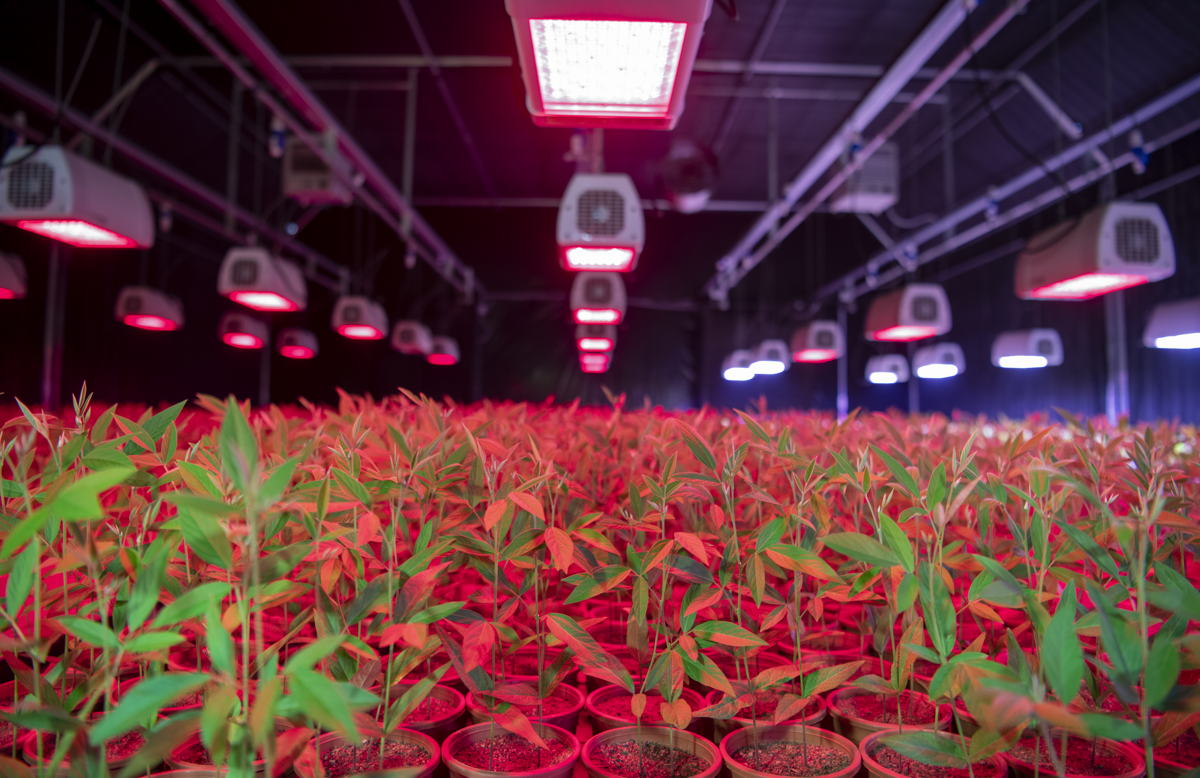
By cultivating up to four generations annually in controlled indoor environments, the team overcame natural breeding limitations. Plants were grown in four inch pots within a 2,250 square foot area, allowing for 18,000 plants to be managed per season. This spatial optimization significantly increased seed output. The process was further streamlined through genomic selection and the use of a seed chipping method, allowing researchers to screen traits early and with high accuracy.
According to Dr Stanford Blade, Deputy Director General, Research and Innovation at ICRISAT, this scientific intervention exemplified how technological systems could accelerate time sensitive breeding goals, offering practical crop solutions in a compressed timeline.
“This breakthrough was made possible by the world’s first pigeonpea speed breeding protocol, developed by ICRISAT in 2024. The protocol enabled researchers to grow up to four generations per year, reducing the time required to develop a new variety from 15 years to just five.”
Tackling India’s Pulse Deficit through Seasonal and Spatial Expansion
India currently faces a shortfall in pigeonpea production, with an annual domestic yield of 3.5 million tons against a requirement of five million tons. This gap necessitates imports valued at approximately US$ 800 million each year. ICPV 25444 contributes to a dual strategy to bridge this gap through both vertical and horizontal expansion of cultivation.
Vertically, high yielding varieties like ICPV 25444 can be used to increase productivity across five million hectares already allocated for pigeonpea during the kharif season. Horizontally, the variety enables expansion into non traditional seasons and terrains. Its short growth cycle and heat tolerance make it suitable for cultivation in rice fallows during the rabi season and on currently unused summer irrigated lands.
Particular emphasis has been placed on deploying the variety in two to three million hectares of tail end command areas. In these regions, prevailing cropping patterns, such as paddy-paddy, paddy-maize, or paddy-vegetable rotations, are frequently compromised by terminal moisture stress, making second crops uneconomical. With a yield potential of 1.5 to 2 tons per hectare, pigeonpea presents a viable alternative that can improve farmer profitability by INR 20,000 per hectare. ICRISAT plans to scale the adoption of this model to one million hectares through a targeted approach using remote sensing, GIS tools, enhanced agronomy practices, and robust seed distribution systems.
Also read: GROWERS Launches New Tool to Deepen Customer Understanding in Agri Retail
Global Applicability of the Speed Breeding Platform
ICRISAT’s speed breeding platform is not limited to India. The institute is now developing a global trait diversity panel using the entire pigeonpea genebank collection of 13,000 accessions. This global resource is being designed to support breeding programs in Asia, Africa, Australia, Brazil, and Ecuador.
Dr Sean Mayes, Global Research Program Director for Accelerated Crop Improvement at ICRISAT, highlighted the scalability of the breeding platform. He stated that international partnerships will benefit from the new approach, which can expedite the development of climate adaptive varieties worldwide. The breeding infrastructure, combined with data driven trait selection, aims to respond effectively to climate variability and evolving agro-ecological challenges.
“ICRISAT is developing a global trait diversity panel from the entire pigeonpea genebank collection (13,000 accessions) using the speed breeding platform. This positions the institute to support breeding programs globally, with active partnerships in Asia, Australia, Brazil, Ecuador and Africa.”
Field Trials in Karnataka
The field evaluation of ICPV 25444 has already shown promising results in Karnataka. In Bagalkot district, where pigeonpea is generally cultivated only during the kharif season, two farmers, Hanumantha Mirji and Basavaraj Ghanti, opted to trial the variety in the summer after learning about its heat tolerance. The crop, planted at high density, performed well under extreme temperature conditions and both farmers expressed satisfaction with its growth and yield prospects.
Dr Vijendra S Sangam, Head of the Varietal Research and Development Center at the Karnataka State Seeds Corporation in Dharwad, confirmed that the initial results were encouraging and that farmer interest in the new variety is increasing.
Another farmer, Gururaj Kulkarni, who also participated in the trial, noted the cultivar’s short maturity period of four months and its resilience to pests and diseases. He described ICPV 25444 as highly beneficial for summer cultivation and expressed confidence in increasing its acreage in the coming year.
Looking Ahead
The development and deployment of ICPV 25444 offer a possible shift in pulse cultivation strategy in India. With its resilience to heat, shorter maturity duration and successful application in multiple states, the variety represents a timely intervention aimed at enhancing pulse security and offering farmers more flexible cropping choices. The integration of speed breeding into pigeonpea research has established a new benchmark for how breeding programs can respond swiftly to both climatic and market-driven imperatives.