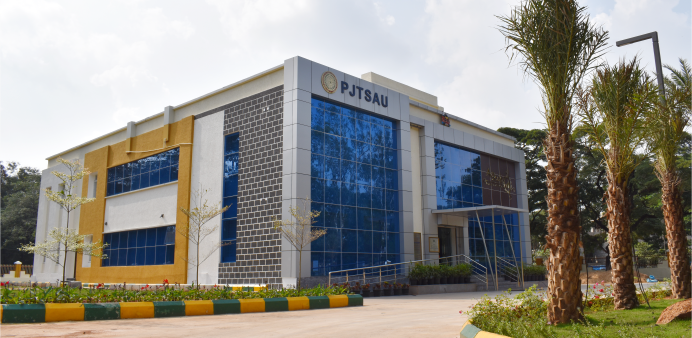
Telangana is set to host India’s first Agri Robotics IoT Solutions for Agriculture (ARISA) Lab at Professor Jayashankar Telangana Agricultural University (PJTAU), marking a new phase in the state’s approach to digitally enabled agriculture. The lab will be inaugurated as part of a broader strategic agenda under PJTAU’s newly constituted Centre for Digital Agriculture.
Developed in collaboration with BITS Pilani and the Indian Institute of Technology (IIT) Hyderabad, the project has secured financial backing from the State Bank of India, which has sanctioned a INR 12 crore grant. The ARISA lab is scheduled to roll out its first robotic prototype within the year. This robotic model, intended for weeding and harvesting operations, directly responds to the evolving labour dynamics in the agriculture sector.
A Response to Demographic Shifts in Farming
With the average age of farmers in Telangana nearing 60, university officials underscored the urgency of addressing the declining participation of younger generations in agriculture. The emerging labour gap has created the need for tools that reduce dependency on manual effort while enhancing operational efficiency and precision.
According to the university’s leadership, fewer individuals may opt for agricultural work in the coming years, making the development of autonomous farm tools essential. PJTAU aims to tailor its first robotic unit to the unique cropping conditions of the region and to deploy it within the next 12 months as part of a broader plan to digitise farm operations.
Robotics, IoT, and Smart Pest Management
The ARISA Lab will not limit itself to robotics. Its broader mandate includes the development of Internet of Things (IoT) enabled systems for pesticide and weed management. These technologies are expected to help farmers optimise input use, reduce environmental stress and improve responsiveness to pest infestations.
The ARISA lab is part of a larger cluster of four specialised units under the Centre for Digital Agriculture. Together, these labs aim to embed digital intelligence into various aspects of agriculture, aligning with a future facing vision for farming in Telangana.
Drone Technology Adds an Aerial Dimension
One of the Centre’s affiliated labs is focusing on drone based applications. In partnership with the Telangana Drone Academy, this unit will provide training for farmers in drone operations, including precision spraying and crop monitoring. These capabilities are designed to enhance field level interventions and provide greater control over crop health and resource utilisation.
Real-Time Soil Diagnostics and Sensor Based Systems
Another unit is piloting smart agriculture technologies in Vemulawada. This includes soil sensors capable of delivering immediate nutrient level data, described by officials as functioning like an “ATM dispensing soil reports.” These diagnostics help farmers make informed decisions about cropping patterns and input management based on real time soil health metrics.
In addition, the same unit is developing sensor based monitoring systems for pesticide and water use. These systems are designed to issue alerts ahead of potential pest outbreaks or irrigation shortfalls, enabling timely interventions. The development of these tools is supported through technical and financial assistance from German collaborators.
International Cooperation and Vision 2047
The broader initiative has attracted international interest and support, particularly from German entities contributing to the sensor based alert systems. PJTAU has articulated a long term goal to overhaul the state’s agricultural landscape by 2047, India’s centenary year of independence, through the systematic deployment of robotics, IoT, AI, drone and sensor technologies.
Also read: USDA Launches $8.5M Screwworm Dispersal Facility in Texas
The integrated structure of the labs is designed to promote a collaborative ecosystem that brings together hardware, aerial systems, analytics and alert networks to support farmers at every stage of the production cycle.
Strategic Outlook and Implementation Pathways
The launch of ARISA Lab and its affiliated facilities aims to address several structural challenges. These include labour shortages, rising input costs and the need for more environmentally efficient practices. By integrating smart technologies into traditional workflows, PJTAU seeks to position Telangana’s agricultural sector for long term resilience and adaptability.
While institutional funding and international collaboration provide a solid foundation, the initiative’s success will depend on effective on ground deployment, training programmes and farmer adoption at scale. The ARISA lab network’s multifaceted focus is intended to build a scalable, replicable model for digital agriculture across India.
As ARISA Lab opens its doors, it marks a transition from manual, labour intensive farming to a data driven, automated agricultural system. This initiative is expected to reshape Telangana’s rural economy and agricultural productivity while laying the groundwork for similar models across other states. PJTAU’s Centre for Digital Agriculture stands at the nexus of this shift, with the ARISA Lab serving as its operational and technological anchor in the journey towards 2047.