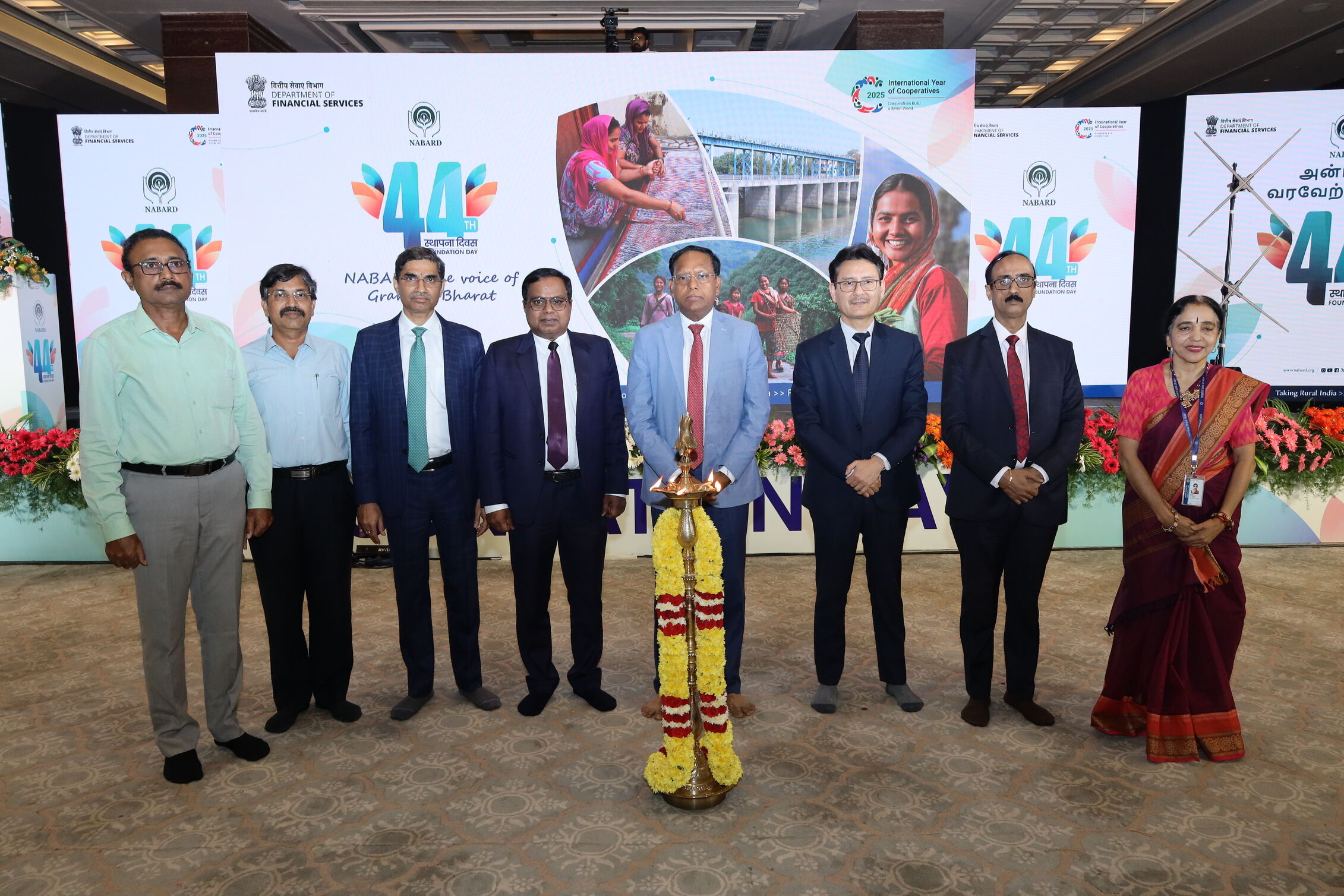
On the occasion of its 44th Foundation Day in July 2025, the National Bank for Agriculture and Rural Development (NABARD) launched the RuralTech CoLab, a dedicated digital platform designed to support and scale rural technology startups. The platform is positioned as a collaborative innovation space that enables rural focused entrepreneurs, fintech and agritech ventures, research institutions and technology developers to co-create, pilot, and expand solutions tailored to agriculture and rural development.
RuralTech CoLab facilitates a streamlined empanelment and onboarding process, providing startups with direct access to NABARD’s grassroots network, which includes self help groups (SHGs), farmer producer organizations (FPOs), non governmental organizations, cooperative banks and rural institutions. The portal is structured to promote solutions that are smart, scalable and sustainable, particularly those that strengthen rural enterprises, enable digital transformation and support grassroots entrepreneurship.
By integrating a broad spectrum of stakeholders into a single digital ecosystem, RuralTech CoLab offers an opportunity for startups to collaborate directly with NABARD and its field presence across the country. It also creates new channels for pilot programs, innovation testing and scaling of digital tools and services designed specifically for rural markets.
This initiative is complemented by additional digital support mechanisms, including a newly launched WhatsApp channel to enhance real time communication with innovators, as well as a grievance redressal platform for rural cooperative banks. These platforms are designed to improve institutional responsiveness, deliver market intelligence and support last mile connectivity in rural development.
Commemorative Event Highlights NABARD’s Evolving Mandate
The 44th Foundation Day was observed with a central event in Chennai, where NABARD’s past contributions and future roadmap were outlined through a series of strategic announcements and thematic exhibitions. The celebrations included a panel discussion on rural enterprises, with a focus on inclusive growth, rural job creation, and the enabling role of innovation in decentralized economies.
An exhibition showcased a variety of traditional crafts, agro products, and technology driven rural innovations, demonstrating the spectrum of enterprise emerging across rural India. The displays reflected both community driven entrepreneurship and region specific solutions in fields ranging from sustainable agriculture to artisan products.
“As India accelerates toward inclusive growth, NABARD is prepared to lead from the front through digital transformation, support for rural enterprises, and mission led programmes that unlock grassroots potential. Our focus now is to scale high impact solutions, nurture entrepreneurial ecosystems, and ensure sustainability remains at the heart of development.”
Expansion of Outreach and New Development Programs
As part of its ongoing efforts to strengthen regional outreach, NABARD inaugurated a new sub office in Leh, Ladakh. This expansion is intended to deepen development finance, capacity building and institutional support in remote and frontier regions. The new office extends NABARD’s presence into high altitude zones, ensuring that even geographically isolated communities are integrated into mainstream development programs.
A radio awareness campaign was launched to promote financial inclusion through a dedicated jingle broadcast on All India Radio and community radio networks. This campaign targets rural and semi urban populations with key messages on savings, credit access, and insurance coverage.
To address the needs of ultra poor rural households, NABARD introduced the Graduated Rural Income Generation Programme (GRIP). This initiative provides returnable grants and capacity building support to help marginalized households shift from subsistence to formal economic activity. The program is designed to foster upward economic mobility through structured livelihood interventions.
A digital grievance redressal mechanism named “NIVARAN” was also introduced for rural cooperative banks. This internal platform allows for 24×7 complaint registration and tracking, aiming to improve institutional transparency, accountability and operational efficiency across the cooperative banking network.
Also read: INTERVIEW | Vijay Singh on How Shunya Agritech is Rethinking Livestock Nutrition
Publications and Media on Institutional Legacy and Impact
Several publications were released during the event to document NABARD’s impact and institutional journey. One of these was “RIDF@30: A Journey of Rural Transformation”, which chronicles three decades of the Rural Infrastructure Development Fund and its role in building critical infrastructure for irrigation, rural roads, education and health services. Another release, the “Grameen Bharat Mahotsav” coffee table book, captures the spirit of the cultural and entrepreneurial showcase held in January 2025 at Bharat Mandapam. This publication illustrates rural India’s creative and economic vitality, presenting a visual narrative of regional diversity and innovation.
Additionally, “Beyond Numbers 2025” was unveiled as a comprehensive impact report that highlights NABARD’s work across sectors such as credit, climate adaptation, digital inclusion, and institutional development. The evening also featured the premiere of a documentary titled Green Roots: NABARD’s Journey Towards Climate Resilience, which presents a detailed narrative of the organization’s interventions in sustainable agriculture, environmental protection, and climate-smart development over the decades.
Looking Ahead
With the launch of RuralTech CoLab and a set of coordinated programs across finance, digital outreach, institutional support and sustainable livelihoods, NABARD’s 44th Foundation Day marked a new phase in its operational trajectory. The focus remains on building integrated, digitally connected and community oriented solutions that respond to current rural challenges, including climate risks, digital divides and socio economic vulnerabilities.
The initiatives collectively aim to strengthen the rural economy through collaborative innovation, infrastructure enhancement, and targeted interventions that prioritize inclusion, efficiency, and resilience.