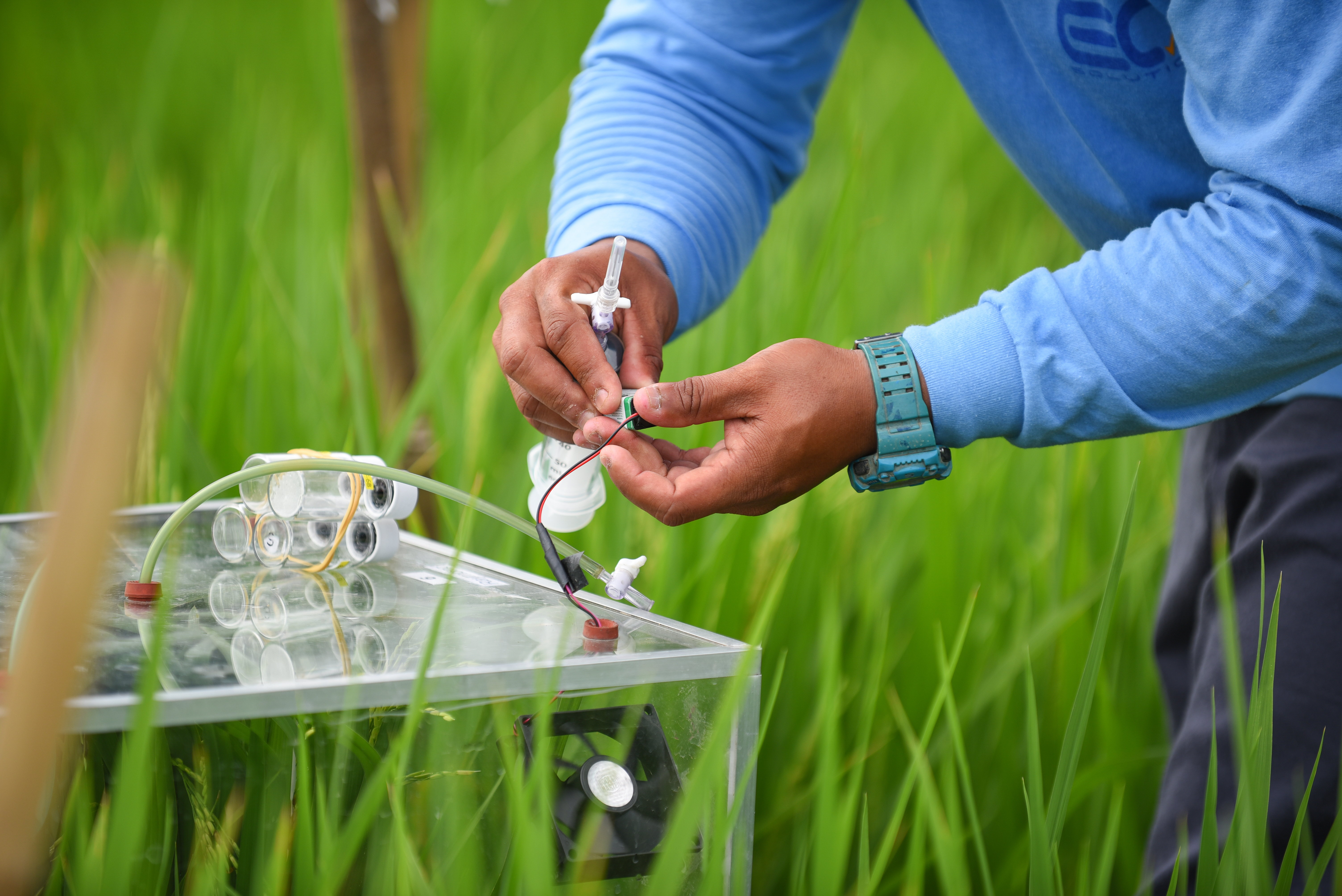
BASF has entered into a strategic partnership with the Indian Council of Agricultural Research – Central Rice Research Institute (ICAR-CRRI) to accelerate climate smart rice farming in India. The collaboration is centered on a two year trial program in the states of Odisha and Jharkhand that aims to test practical solutions for reducing greenhouse gas emissions while sustaining rice productivity.
Focus on Alternate Wetting and Drying (AWD)
At the heart of the initiative lies Alternate Wetting and Drying (AWD), a water management technique in paddy cultivation where fields are not kept continuously flooded but are intermittently drained. This practice is known to significantly reduce methane emissions and conserve water resources. The trial will assess not only the impact of AWD on rice yields but also its broader implications for sustainability.
By providing scientific evidence on the effectiveness of AWD, the project seeks to offer farmers a proven method of cultivating rice with less water while contributing to emission reduction goals. The inclusion of practical field conditions in Odisha and Jharkhand ensures that the results will be relevant to farmers dealing with diverse agro climatic challenges.
Weed Management Challenges and Herbicide Tolerant Rice
One of the major hurdles in adopting AWD is the problem of weed growth in intermittently drained fields. When soil is aerated more frequently, weeds proliferate, making it difficult for farmers to maintain productivity. The trial will therefore also explore the role of herbicide tolerant (HT) rice seeds in overcoming this barrier.
ICAR-CRRI has released two HT rice varieties, CR Dhan 807 and CR Dhan 812, which are designed not only for effective weed management but also for resilience against changing climate conditions. Their introduction into AWD systems is expected to support farmers in balancing productivity with sustainable practices. These seeds could become a critical enabler of AWD adoption by reducing reliance on manual or intensive weed control.
Contribution to BASF’s Global Carbon Farming Program
This initiative is part of BASF’s larger global carbon farming program in Asia Pacific, which aims to achieve a 30% reduction in greenhouse gas emissions from rice cultivation. By integrating AWD with herbicide tolerant rice, the program looks to identify scalable pathways for sustainable rice farming that can be replicated across the region.
The trial also aligns with Verra’s VM0051 methodology for rice, a globally recognized standard for carbon accounting in paddy cultivation. By building evidence under this framework, the project has the potential to create new incentives for farmers through carbon trading mechanisms. Such opportunities could translate into additional income streams, while also reducing the cost of cultivation through more efficient practices.
“To make the big strides that are needed to reduce carbon emissions in farming, we need to evaluate how new technologies and tools can come together to enable climate smart agricultural practices. We partner with leading institutions like ICAR-CRRI to ensure our solutions are grounded in science and deliver real value to farmers.”
“This collaboration presents immense opportunities to augment farmers’ income by reducing the cost of cultivation, allowing them to grow rice with limited water and providing an opportunity to derive additional benefit from carbon trading by reducing methane emission from the rice fields in future. ICAR-CRRI have released two herbicide tolerant rice varieties CR Dhan 807 and CR Dhan 812 both of which are also climate resilient.”
Implications for Farmers and Future Outlook
Beyond emission reduction and yield improvement, the trial is expected to demonstrate how integrating technology with climate smart practices can help farmers manage resources more efficiently. By lowering water usage, controlling weeds effectively, and enabling potential participation in carbon markets, the project opens up multiple avenues for improving farmer income and resilience.
Also read: Khetika Opens New Bengaluru Plant, Targets 50% Market Share in Fresh Food Segment
The initiative also signals a growing shift toward carbon farming in India, where agricultural practices are increasingly being evaluated not only for productivity but also for their environmental footprint. With rice being one of the largest contributors to methane emissions in agriculture, the partnership between BASF and ICAR-CRRI provides a structured model of how science driven collaborations can align farmer welfare with sustainability goals.
A Collaborative Step in Climate-Smart Agriculture
Through its combination of research, technology, and farmer focused implementation, the BASF and ICAR-CRRI collaboration reflects a new phase in rice cultivation strategies in India. The partnership is designed to build a foundation where farmers can adopt AWD with the support of HT rice varieties, reduce greenhouse gas emissions, and tap into future carbon incentives.
By bridging scientific research and practical farming practices, this initiative sets the stage for more resilient, sustainable, and income enhancing pathways for rice cultivation in India and the broader Asia Pacific region.