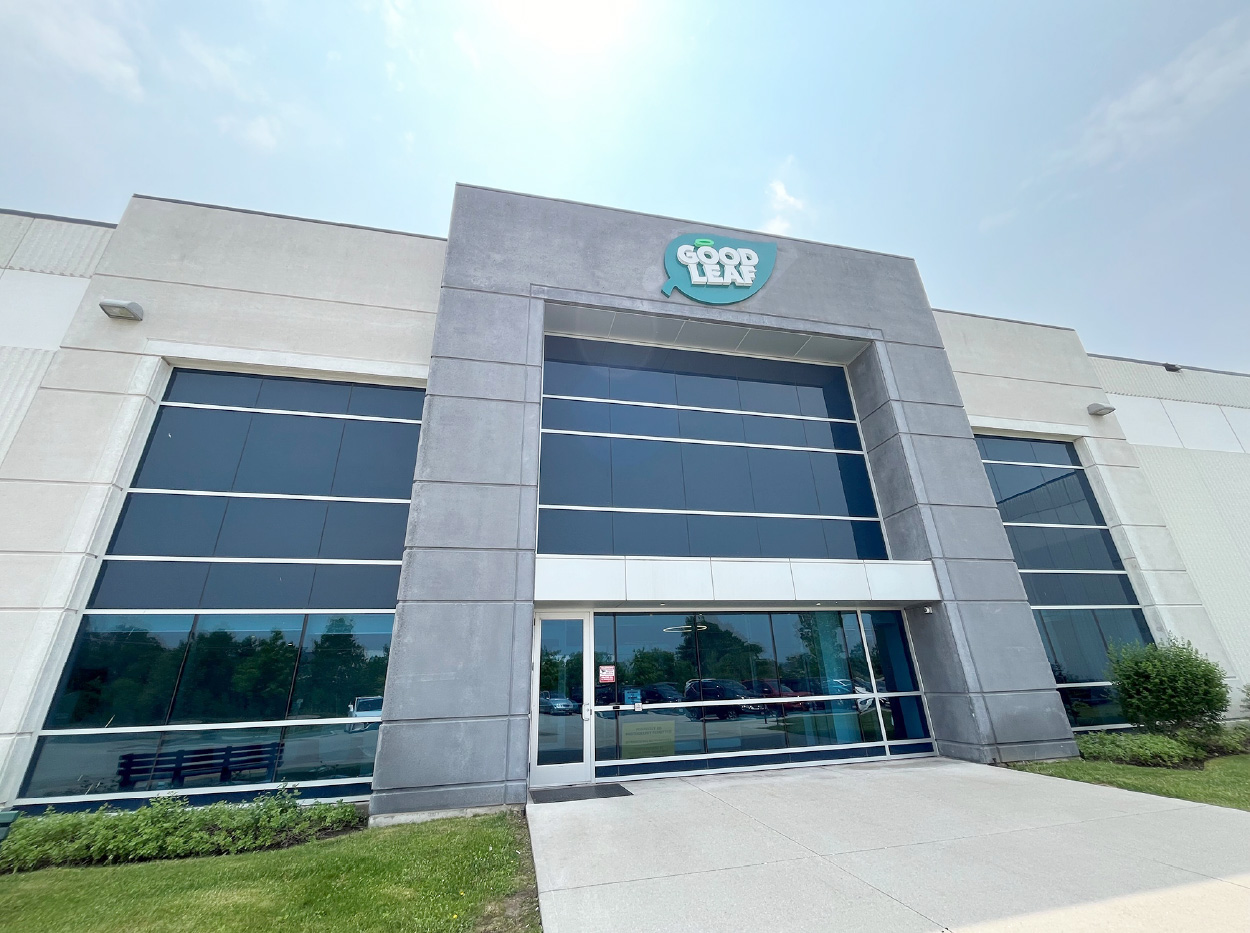
GoodLeaf Farms, a Canadian vertical farming company, has raised $52 million in equity financing to expand its controlled environment farming operations in Alberta and Quebec farms and to develop a new Research and Development (R&D) centre in Ontario. The funding comes from Farm Credit Canada (FCC), Power Sustainable Lios, and McCain Foods, which will also support a new Agricultural Centre of Excellence in Ontario.
GoodLeaf owns three indoor farms in Guelph, Calgary and Montreal. The latter two span approximately 100,000 square feet, and can produce approximately two million pounds of leafy greens per year. The 50,000-square-foot Guelph farm, commissioned in 2020, was the company’s first commercial-scale property and has since served as a centre for testing its horticulture program and conducting market research.
According to GoodLeaf, its indoor farms use 97% less water, 95% less land, and require 10 times fewer food miles, the distance food travels from its origin to the consumer, compared with traditional open-field farming operations in California.
We entered 2025 with incredible momentum, and by April, demand for our products nearly doubled as Canadians from coast to coast embraced Canadian-grown greens. With this new funding, we will double the capacity of our two largest farms in 2026, giving Canadians even greater access to premium, locally grown baby greens and nutrient-dense microgreens.
According to the company, 2025 has marked a notable shift, with steady growth and increased demand for domestically produced leafy greens. By April, demand for GoodLeaf’s baby greens, microgreens, and blended products had almost doubled, pointing to broader national uptake of controlled-environment produce.
Investor Perspective
The latest funding round includes investments from both new and existing shareholders, including Farm Credit Canada (FCC), Power Sustainable Lios, and McCain Foods. The investment will support the establishment of a new research and development centre in Ontario, which will focus on improving sustainable and efficient growing practices across GoodLeaf’s three vertical farms.
Also read: AI Takes Centre Stage as Charcha 2025 Maps New Pathways for Agri Market Access
Understood — here is the same meaning, only corrected for grammar and clarity:
For FCC Capital, GoodLeaf’s focus on supporting locally grown Canadian fresh food could help secure Canada’s food future for generations to come. For Power Sustainable Lios, GoodLeaf reimagines the future of the food system and is driving sustainable agriculture forward.
GoodLeaf’s innovative approach is exactly what Canada needs to drive productivity, strengthen our food economy and ensure a reliable supply of fresh produce for families nationwide. By investing in forward-thinking businesses like GoodLeaf, FCC is helping secure Canada’s food future for generations to come
Charlie Angelakos, Vice President of Global External Affairs and Sustainability at McCain Foods, said that as a homegrown Canadian success story, McCain invests in fellow Canadian innovators transforming agriculture and advancing sustainability. He noted that McCain has been a key partner in GoodLeaf’s development from the early days and is pleased to continue supporting the company’s mission.
GoodLeaf Addressing Food Security
GoodLeaf operates CEA facilities that use vertically stacked layers to maximise space efficiency and reduce resource use. The approach enables year-round production independent of external weather conditions, addressing concerns of Canada’s exposure to global supply chain disruptions.
The ability to raise funds in today’s market speaks to the confidence investors have in vertical farming as a key solution to Canada’s food security challenges, and the key operational and financial milestones GoodLeaf has achieved
With consumer and retailer interest growing in reliable, locally produced fresh greens, the company’s model is positioned to meet consistent demand for domestic supply. The sector’s reliance on technologies such as LED lighting, hydroponic systems, and automated operations continues to require considerable investment from agricultural operators and venture capital firms.
As CEA advances, it can viewed as a field with the potential to influence Canada’s agrifood system and contribute to long-term food security.