
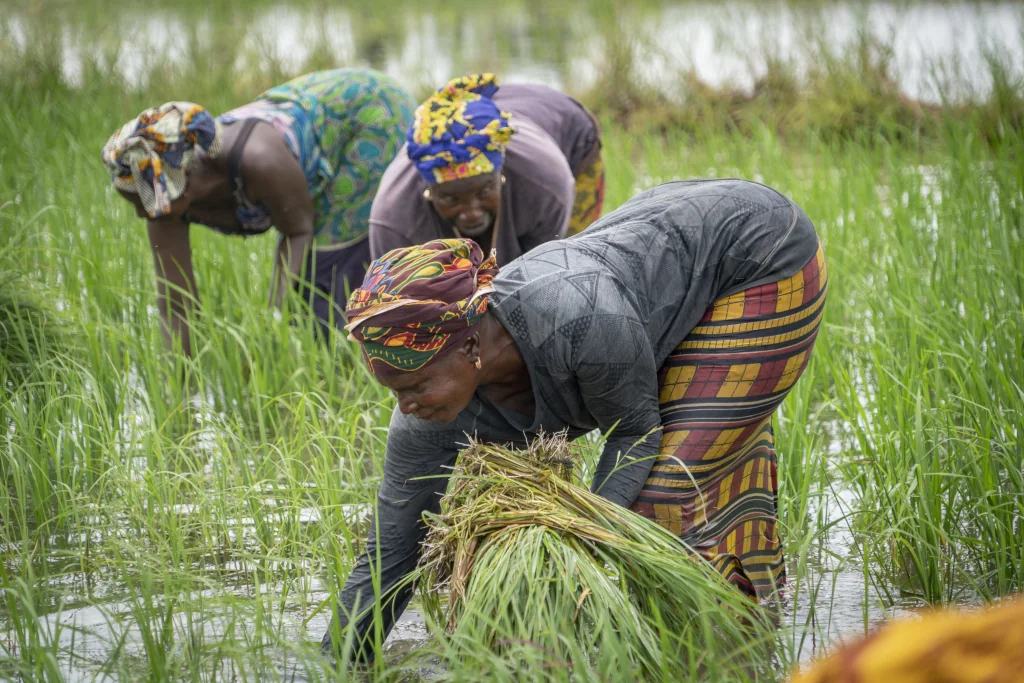
The African Development Fund (ADF) committed $14.64 million in grant to support Project 2 of the Programme to Strengthen Resilience to Food and Nutrition Insecurity in the Sahel (P2-P2RS). The financing comes through the ADF’s Climate Action Window, a climate-focused mechanism within the African Development Bank Group’s concessional lending arm.
The Sahel (Senegal, Mauritania, Mali, Burkina Faso, Niger, Nigeria, Chad, and Sudan) remains highly exposed to climate stress, with recurrent droughts, declining agricultural productivity, land degradation and rising food and nutrition insecurity. The ADF’s support is expected to strengthen ongoing adaptation efforts and help reduce vulnerability for communities across the region.
The funding is designed to help communities in the Sahel cope with increasingly severe climate conditions. It will support the expansion of climate-smart village initiatives linked to local irrigation infrastructure and improve the availability of climate information to guide farming and resource-management decisions.
The Programme to Strengthen Resilience to Food and Nutrition Insecurity in the Sahel (P2-P2RS) operates across multiple countries, promoting cooperation in agriculture, climate-adaptation planning, natural-resource management and nutrition. The newly approved grant reinforces the African Development Fund’s commitment to regional stability through climate-smart agriculture and inclusive development.
The Climate Action Window grant is expected to reach 30 municipalities and support the establishment of 60 climate-smart villages across Sahel countries, with the aim of improving community resilience to climate-related shocks. The climate-smart villages will function as demonstration sites where communities apply a mix of climate-resilient agricultural practices.These include water-efficient irrigation, drought tolerant crops, soil-restoration methods, sustainable livestock management and community-based oversight of natural resources.
Planned initiatives includes updating the Regional Catalogue of Species and Varieties, developing a business-to-business networking platform and improving seed-multiplication capacity within national research systems and seed companies to ensure supply for climate-smart villages.
Building Inclusive Climate Resilience
A major component of the ADF funding involves improving climate-data systems across the region. Funding will be used to upgrade observation networks that track weather, water and soil conditions, and to establish an integrated digital platform for real-time data collection and dissemination. The project will also introduce a regional system for monitoring loss and damage, including standardised reporting and a multi-level data platform to centralise climate-impact information. These tools are intended to support early warning, planning and response efforts for governments, farmers and regional institutions.
Also read: AGF Secures $1M Seed Investment to Accelerate Climate Smart Agro Industrial Expansion
The new funding will also be used to strengthen the regional seed system by helping distribute resilient, high-yielding varieties across participating countries. The project will also include training efforts aimed at supporting the participation of women and young people.
Improved, climate-resilient seeds are considered central to agricultural adaptation in the Sahel. The project will strengthen the region’s seed infrastructure by updating the Regional Catalogue of Species and Varieties, creating a regional business to business (B2B) networking platform, increasing seed multiplication capacity within national research systems and supporting seed companies in producing resilient, high-yield varieties. These steps are intended to ensure a reliable supply of quality seeds for climate-smart villages and improve productivity across the region.
Efforts to expand participation in the project place particular emphasis on women and young people, recognising their central role in agricultural and community resilience. Planned activities include training to strengthen technical and entrepreneurial skills, support for accessing climate-adaptive technologies and opportunities to participate in leadership structures. The ADF funded project will also promote jobs in areas such as seed production, agro-processing and climate-related services, aligning with the African Development Bank’s broader focus on inclusive growth.
ADF’s Integrated Climate Outlook
The ADF’s latest investment in the Sahel reflects a move toward embedding climate resilience within everyday agricultural systems.
By combining climate-smart villages with improved seed infrastructure, digital climate platforms and training for women and youth, the programme takes a multi layered approach. Strengthening seed multiplication and expanding access to drought-tolerant varieties directly supports crop performance, while enhanced observation networks and data systems are meant to improve early warnings and guide local planning.
For a region facing persistent drought, degraded land and rising food insecurity, the ADF funded integration of digital tools and resilient agricultural inputs is particularly important. Real-time climate data, standardised loss and damage reporting and community led resource management can help farmers and local authorities respond more quickly to climate shocks.
The effectiveness of this effort, however, will depend on sustained institutional capacity and how well ADF backed systems and tools are maintained and used once the initial funding cycle ends.

