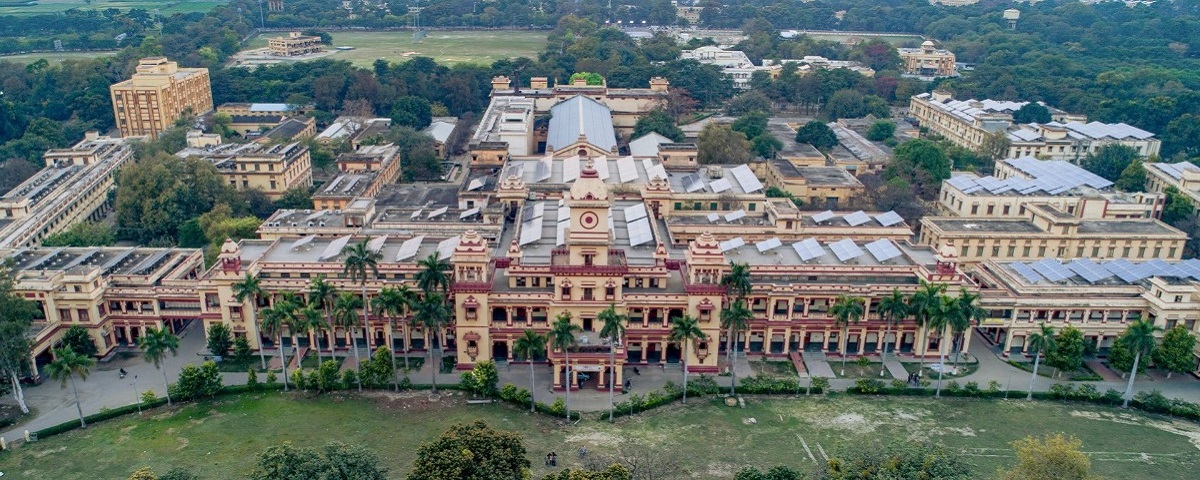
The Indian Institute of Technology (BHU), Varanasi has formalised the operating framework for its proposed Agritech Business Park following a sequence of structured engagements involving farmers, Farmer Producer Organisations (FPOs), scientists and institutional stakeholders.
The Agritech Business Park at IIT-BHU has been established as an institutional interface that will bring together academic research capacity, farmer collectives, agribusiness actors and financial institutions. According to information shared during the engagements, the park’s scope is expected to cover areas such as technology dissemination, post-harvest management, agribusiness modelling and market-linked production systems. The institute has indicated that the framework will be anchored within IIT-BHU’s academic and management structures, with participation from multiple departments.
IIT-BHU has constituted an internal committee to oversee the Agritech Business Park initiative, with representation from academic leadership and relevant departments. The committee is expected to define the park’s governance model, partnership approach and activity roadmap. According to institutional statements, the park will function as a platform for collaboration rather than a standalone infrastructure project.
The institute has framed the initiative within the broader context of regional agricultural development in Eastern Uttar Pradesh, an area characterised by small landholdings and limited integration with organised agribusiness value chains. The emphasis, as outlined during the engagements, is on aligning research outputs with enterprise needs and market requirements.
Farmer Meet Highlights Operational and Market Constraints
The meetings were organised as part of the institute’s effort to gather stakeholder inputs and align operational priorities for the park. Participants included farmers from multiple districts in Eastern Uttar Pradesh, representatives of FPOs, scientists from agricultural and allied institutions, and individuals associated with banking and agribusiness sectors.
A central component of the consultation process was a farmer-focused meet involving around 100 farmers from Eastern Uttar Pradesh. Discussions centred on operational challenges faced at the farm level, including access to markets, post-harvest losses, price volatility and the limited commercial viability of fragmented production systems.
Also read: ThinkAg Roundtable Explores How Farmer Collectives Can Drive Tech Adoption
Rather than emphasising technology demonstrations, the interaction focused on how agribusiness structures and organised market participation could address income stability. Digital advisory tools, input optimisation and value-addition were referenced in the context of improving decision-making, but the discussions remained anchored in structural constraints rather than product-led solutions.
Participants highlighted the need for aggregation mechanisms and clearer linkages with buyers, particularly for small and marginal farmers. Institutional representatives indicated that the Agritech Business Park could serve as a coordination platform for such linkages, though specific implementation models were not detailed at this stage. The focus is on identifying weaknesses in existing systems and structuring institutional support to address those gaps.
Scaling Agritech Business Park
A separate interaction was held between FPO representatives and scientists to examine the role of producer organisations within the Agritech Business Park model. The discussion focused on how scientific inputs, data-driven tools and institutional partnerships could be applied at the collective level, rather than targeting individual farmers.
FPO representatives outlined operational constraints related to working capital, infrastructure, aggregation and access to consistent markets. Scientists and institutional speakers discussed crop management practices, digital advisory platforms and the potential role of research institutions in supporting FPO-led enterprises. The economic viability of technology adoption is closely linked to the strength of farmer collectives.
The session also included references to financial linkages, contract farming arrangements and market-oriented production planning as mechanisms that could be supported through the business park. Organisers indicated that the park would seek to facilitate coordination among FPOs, research institutions and market actors, though the structure of such facilitation remains under development.
From an industry perspective, the Agritech Business Park at IIT-BHU reflects a growing trend of academic institutions attempting to play a more direct role in agricultural enterprise development. The use of farmer and FPO consultations to shape the framework suggests an effort to ground the initiative in operational realities rather than purely research-driven agendas.
However, the long-term impact of the park will depend on execution factors that remain unresolved, including sustained funding, private-sector participation and the ability to translate institutional coordination into commercially viable outcomes. Similar initiatives in other regions have faced challenges in moving from consultative platforms to scalable agribusiness models.
At this stage, the IIT-BHU Agritech Business Park represents a structured institutional intent, with its effectiveness likely to be determined by how effectively stakeholder inputs are converted into operational programmes and market-linked interventions.