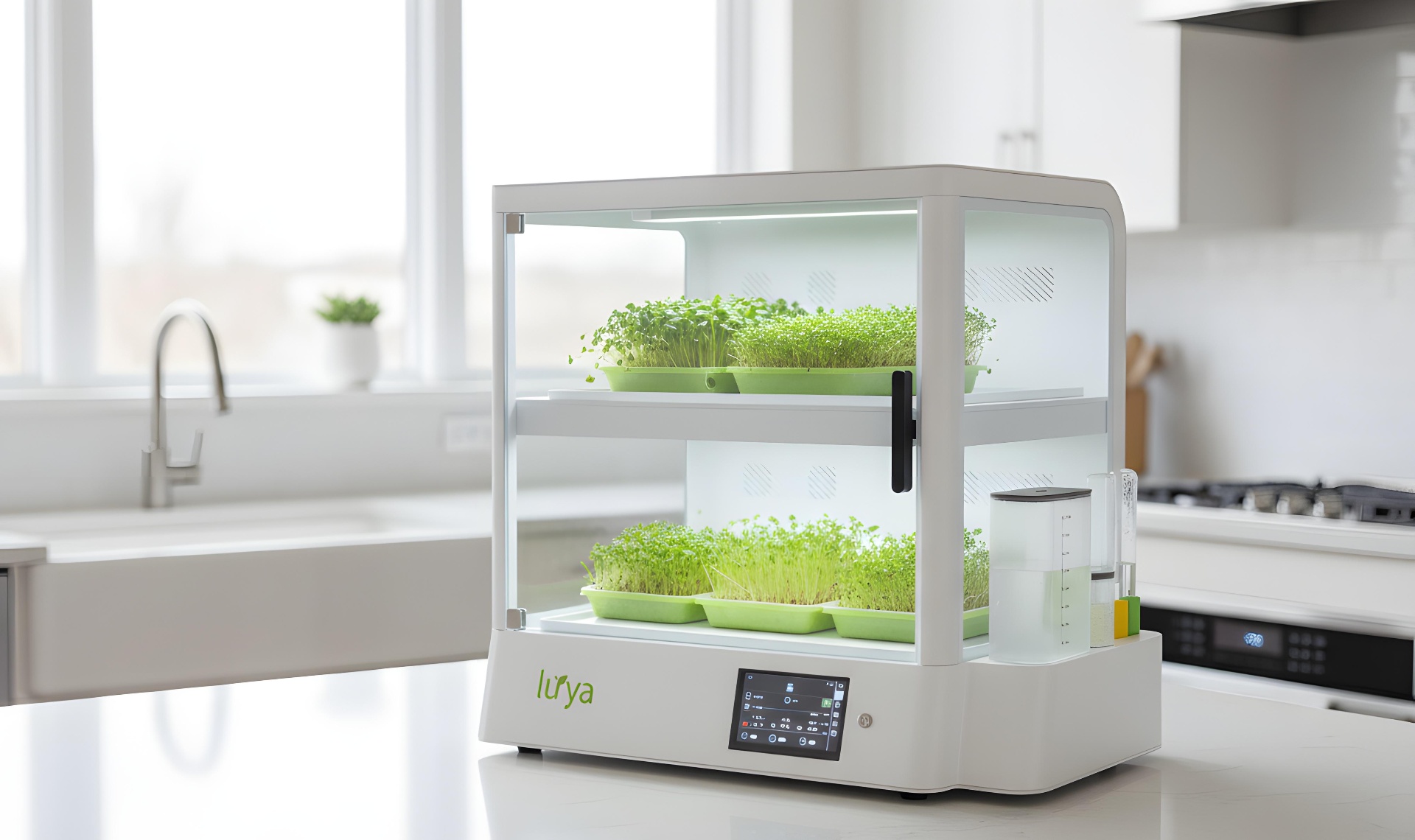
Princeton-based artificial intelligence technology company Luya Tech has introduced an AI-powered microgreens nutrition system at Consumer Electronics Show (CES) 2026 in Las Vegas, aimed at enabling households to grow fresh, nutrient-dense microgreens at home. The system emphasizes nutritional quality over plant yield, focusing on seedlings that deliver concentrated vitamins, minerals, and antioxidants in small servings.
The AI-driven controls adjust environmental conditions in real time to support nutrition outcomes, while a mobile application allows users to customize flavor and nutritional profiles. The platform combines dedicated hardware with a subscription-based model for consumable inputs.
Most people think eating healthy means eating more vegetables, but what really matters is nutrient density. Luya turns the home into a personal nutrition factory — using AI to grow food that is not only fresh, but customized for taste and optimized for health.
According Luya Tech, the platform represents a shift from traditional indoor gardening systems by prioritizing nutrient density rather than simply plant growth. The comapny has also claimed that it is world’s first AI-powered microgreens nutrition system.
Closed-Loop Nutrition Control
The system is designed for growing microgreens with high nutrient concentration and incorporates artificial intelligence, cameras, and environmental sensors to monitor plant development. It automatically adjusts lighting, temperature, humidity, and nutrient delivery in real time throughout the growth cycle.
Luya Tech has stated that the system operates using a closed-loop control approach and is capable of increasing nutrient density by 30 to 50 percent compared with conventional home-growing methods. The company also notes that the setup removes the need for soil handling or manual adjustment of environmental conditions.
Also read: PowerPollen and Oxbo Introduce Mechanized Pollination Solution for Corn Seed Production
Luya compares the user experience to capsule-based coffee machines, where users insert a pre-seeded growing tray and the system manages cultivation tasks such as watering, lighting, climate control, and nutrient dosing. Users can customize flavor and nutritional characteristics, including preferences for milder taste profiles or higher concentrations of specific nutrients such as iron or antioxidants. The company says its AI adjusts growing parameters accordingly for each crop cycle.
Luya has paired its hardware platform with a subscription service that delivers pre-seeded growing trays and liquid nutrient solutions directly to customers every month to ensure consistent results while eliminating the need for users to touch soil, handle seeds, or manage complex growing steps. At CES 2026, the company is showcasing its full system at Booth 62039 in Eureka Park (Venetian Expo, Hall G), where attendees can see live growing units and experience how AI-powered cultivation brings precision nutrition into the home.
AI Shaping Nutrition
The debut of an AI-driven nutrition-focused microgreens system highlights a broader shift within agritech toward precision control at the point of food production, extending concepts traditionally used in commercial controlled-environment agriculture (CEA) to smaller, decentralized settings. Rather than emphasizing yield or speed alone, the approach reflects growing interest in nutrient optimization as a measurable output, aligning agriculture more closely with health and food-quality outcomes.
From an agritech perspective, this signals continued convergence between plant science, data analytics, and automation, where algorithms increasingly guide decisions that were once dependent on grower experience. Applying AI to manage nutrient delivery and growth conditions suggests an attempt to standardize outcomes in crops that are sensitive to environmental variation, an issue that also affects larger greenhouse and vertical farming operations.
The model also mirrors wider industry experimentation with integrated hardware and software input systems, where technology platforms are paired with proprietary consumables and digital interfaces. Such models can lower barriers to adoption by simplifying operations, while also raising questions around scalability, cost structure, and long-term dependency on closed ecosystems.
More broadly, the emergence of nutrition-centric growing systems reflects changing expectations of agriculture’s role, particularly in urban and indoor contexts. As agritech continues to expand beyond field productivity into food quality, traceability, and personalization, these developments may influence how future farming technologies are evaluated, less by volume alone, and more by consistency, control, and downstream value.