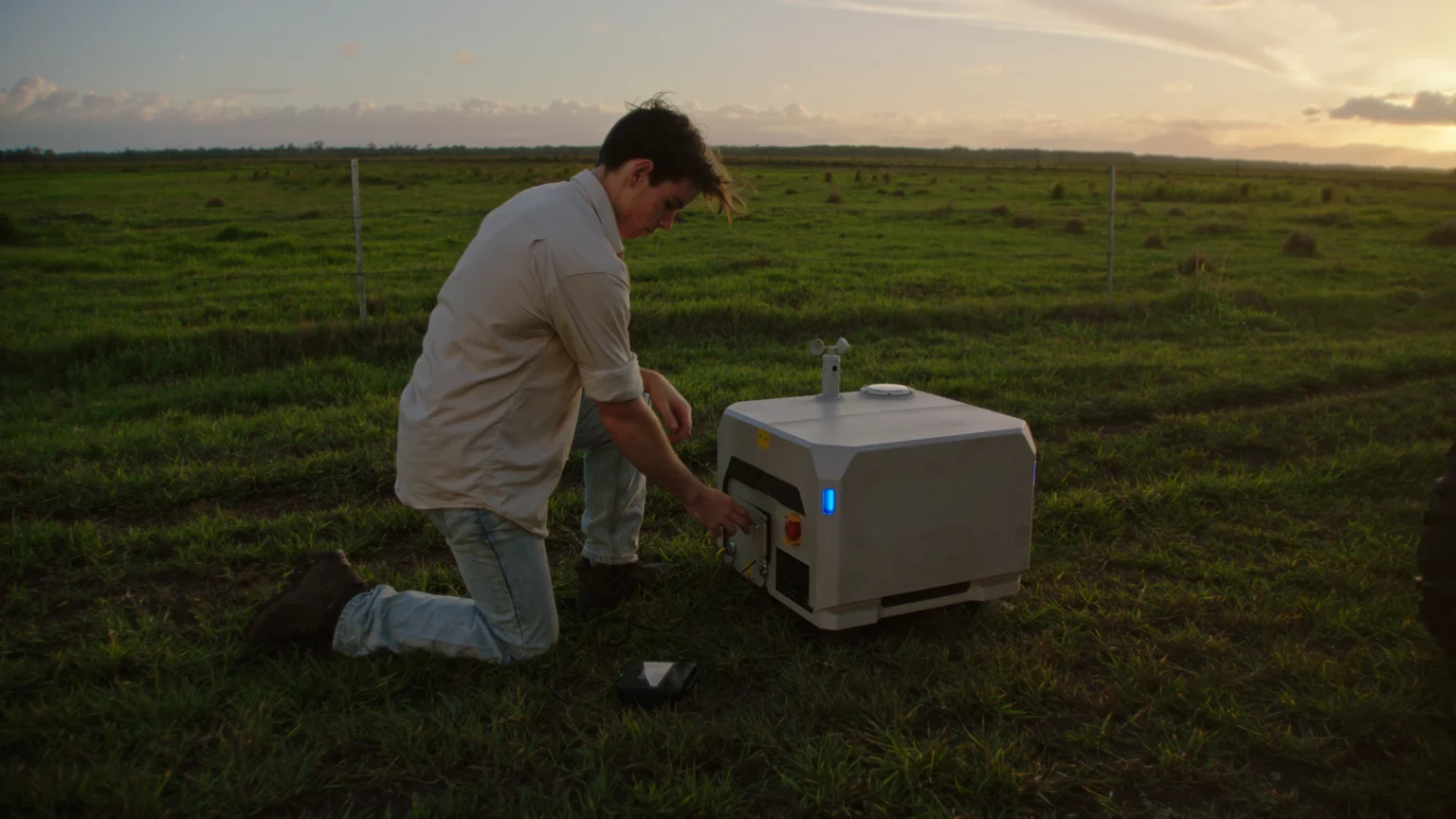
Sydney based agtech startup focused on modernizing livestock management, GrazeMate has raised US$ 1.2 million in a funding round led by Y Combinator, with participation from Antler, NextGen Ventures, and backing from Australia’s NextGen Ventures network. The funding will support the continued development and deployment of the company’s autonomous livestock management technology as it expands operations from Queensland and New South Wales into California. GrazeMate is part of Y Combinator’s Winter 2026 cohort.
From Northern Queensland Farms to a Venture Backed Startup
GrazeMate was founded by Sam Rogers, a 19 year old farmer and mechatronics engineer who grew up on a cattle farm in Bowen, Northern Queensland. Rogers spent his early years watching his father manage up to 6,000 head of cattle using horses, motorbikes, and helicopters, a process that was labour intensive and time consuming. Motivated to find a more efficient approach, Rogers formalised GrazeMate as a company in 2025, transitioning from farm work into the role of chief executive.
Less than a year after its formation, GrazeMate has secured commitments to muster livestock across 1.7 million acres of land in Queensland and New South Wales. The company has now begun expanding its operations into California as it looks to scale beyond the Australian market.
Automating Cattle Movement Through Autonomous Drones
GrazeMate develops autonomous drones designed to move cattle between paddocks without requiring farmers to pilot the equipment. Through a mobile application, a farmer can select a paddock and initiate a muster remotely. Once activated, the system executes the task independently and sends a notification when the cattle have moved through the gate, removing the need to coordinate people, vehicles, or aircraft.
The company positions its technology as a way to reduce the labour, time, and costs associated with traditional mustering practices. According to Rogers, farmers can set the task and allow the system to operate on its own, making decisions in real time based on how the herd responds during the muster.
Operational Data Integrated Into Mustering
In addition to moving livestock, GrazeMate’s drones collect and relay data back to farmers during operations. The system is capable of reporting on the amount of pasture available, providing weight estimates of the herd, and assessing the condition of infrastructure such as water troughs. This information is intended to help farmers determine what actions are required next while enabling them to oversee more of their operations remotely.
Rogers has said that time is often the most constrained resource for farmers, particularly in family run operations where labour availability is fixed. By automating musters and integrating data collection into routine tasks, GrazeMate aims to allow farmers to see and manage more of their land with fewer physical inputs.
Investor Interest and Founder Background
NextGen Ventures cited both the technology and Rogers’ background as key factors in its decision to invest. The firm identified Rogers through its network of on-campus investors while he was studying at the University of Sydney in 2025. NextGen partner Jerry X’Lingson noted that Rogers initially taught himself to code in Chinese to work with alternative drones because he could not afford higher-spec equipment at the time.
Also read: Digital Agriculture Research at Cornell Poised to Receive a Share of $30M in Federal Funding
X’Lingson also pointed to Rogers’ earlier projects, including building a robotic arm at the age of 14, training an AI model to detect electronic waste, and travelling to the United States to compete in an international AI competition, where he placed second out of 10 million applicants. At 16, Rogers experienced a life threatening spinal injury that required three surgeries, after which he recovered and later climbed Everest.
Inspiration Behind the Technology
Rogers has linked the direction of GrazeMate to experiences outside Australia, particularly a trip to Nepal following his recovery. During that time, he observed how Sherpas herd yaks by ringing a bell from a hilltop, using sound to signal movement across a valley. He has described this approach as a reference point for developing non-invasive, scalable signalling methods for livestock movement, which later informed GrazeMate’s system design.
Technology Conditions Enabling Autonomy
According to Rogers, GrazeMate’s system has become feasible due to three broader technological developments. Improvements in drone battery life driven by defence investment, advances in edge computing associated with the growth of artificial intelligence, and regulatory changes that increasingly allow autonomous operations have converged. These shifts have occurred as ranchers face labour shortages, rising costs, and increasing operational pressure.
Expansion Plans and Next Phase
With the funding in place, GrazeMate plans to continue refining its autonomous drone platform and expand its presence across additional livestock markets. The company has stated that the current round positions it to scale deployment and further integrate autonomous systems into routine livestock management, building on validation from early customers and field trials.