
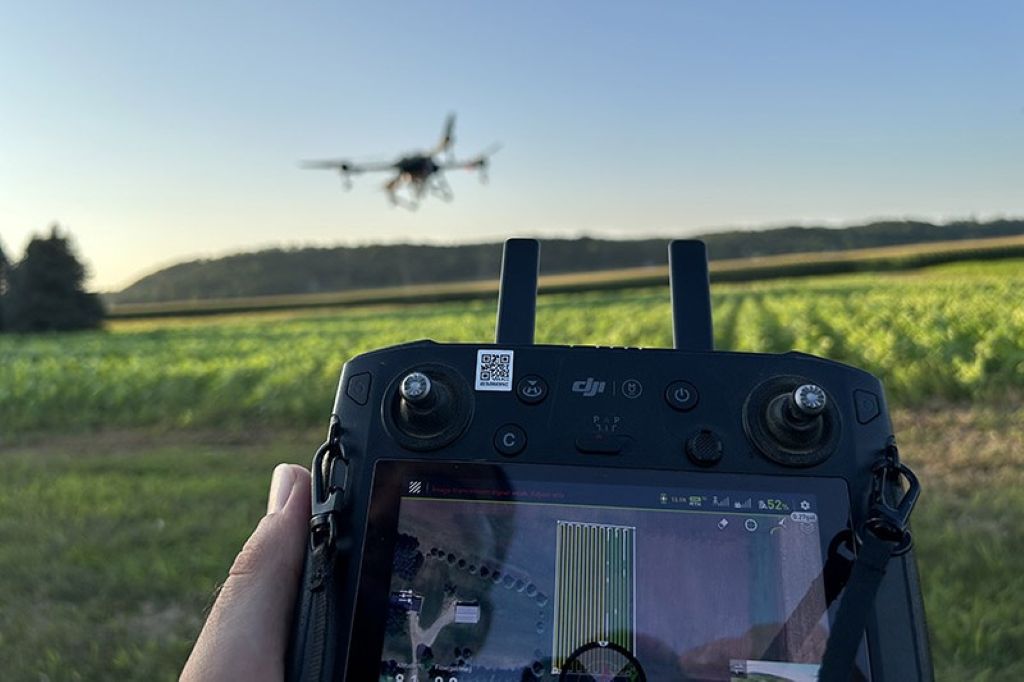
The University of Wisconsin-River Falls (UWRF) has partnered with industry and its alumni network to integrate artificial intelligence into agricultural education, creating hands-on learning pathways that connect students directly with emerging field technologies. Through this model, classroom instruction is reinforced with real world exposure, enabling students to work alongside professionals and graduates who are actively applying AI across crop science, equipment systems, and data driven farm practices.
One of those essential partnerships has been with WinField United, a provider of agricultural products, technology, and resources that operates an Innovation Center in River Falls. With several UWRF alumni now working at the company, the collaboration gives current students access to new tools and field applications, supported by graduates who return as industry colleagues to share expertise and facilitate on-site learning experiences.
Students gain exposure to drones, robots, and mobile AI tools
The partnership is enabling students to work with a range of emerging tools now being deployed on farms. These include drones that fly over fields and use AI to assess plant health, self driving solar powered robots that move through crops to identify weeds and spray only targeted areas, and mobile applications that allow plant and weed identification using smartphones. The approach reduces blanket spraying by focusing treatments only where weeds are detected, while also helping students understand how data driven systems are being embedded directly into field operations rather than remaining confined to office based computing.
The UWRF has emphasized that AI is reshaping agricultural workflows at a rapid pace, making field-based learning essential for preparing students for current roles across the sector. Exposure to real world technologies is positioned as both a practical necessity and a way to deepen student engagement by allowing them to see these systems in action.
AI is really transforming agriculture. Things are changing really fast, especially in the field. We have drones now that fly over fields and use AI to do plant health ratings. It can optimize spray technologies by targeting just the weeds, reducing the need to spray.
Alumni bridge academia and applied research
A central component of this effort is sustained connection with industry, with alumni serving as a bridge between academic programs and applied research environments. WinField United, which operates an Innovation Center in River Falls, employs multiple graduates from the university who now support current students by providing access to tools, trials, and technical guidance in the field. This ongoing cycle has created continuity between education and professional practice, with former students returning as industry colleagues who actively mentor the next cohort.
Through this pipeline, graduates who entered WinField United via internships arranged at university career fairs are now working in research and development roles, including seed treatments and emerging technologies. These alumni report that supporting interns has become an integral part of their professional responsibilities, noting consistent student enthusiasm for exploring new digital tools and observing measurable growth from the beginning to the end of internship programs.
AI applied across R&D operations and farm-facing insights
Within WinField United’s R&D operations, AI is being applied in multiple formats, including specialized imaging drones used to collect and analyze plot data. This workflow supports the delivery of agronomic insights to retailers at the farm gate while also creating learning opportunities for university interns and faculty. Alumni working in equipment and seed laboratory functions are closely involved in these processes and regularly engage with students to discuss how AI is being incorporated into sprayers, drones, tractors, and data platforms across the agricultural value chain.
Also read: Carbon Robotics Introduces Large Plant Model to Support Laser Weeding Technology
Field research at Mann Valley Laboratory Farm
Students have already begun applying these technologies in university led research. Senior crop science majors recently used drone-based imaging and AI analysis to study sunflower diseases at the Mann Valley Laboratory Farm. The project allowed participants to directly observe how drones collect field data and how AI systems interpret that information, offering practical insight into the capabilities of automated analysis for crop research. The experience also provided early exposure to tools that many peers may not encounter before graduation, helping students clarify future research interests and career directions.
Faculty involved in the collaboration note that access to advanced equipment through industry partnerships has strengthened on-campus trials and enhanced teaching outcomes. Working directly with industry teams has made it possible to deploy modern technologies on university research plots, while also giving educators the opportunity to see former students return as technical contributors and mentors.
Aligning education with evolving agricultural practices
As AI continues to expand its footprint across agriculture, the University of Wisconsin-River Falls (UWRF) and WinField United are aligning academic instruction with field-level innovation, ensuring students graduate with firsthand experience of the tools shaping today’s farms. The partnership reflects a coordinated model in which industry resources, alumni networks, and university research converge to support workforce readiness and applied learning in an increasingly data-driven agricultural landscape.


