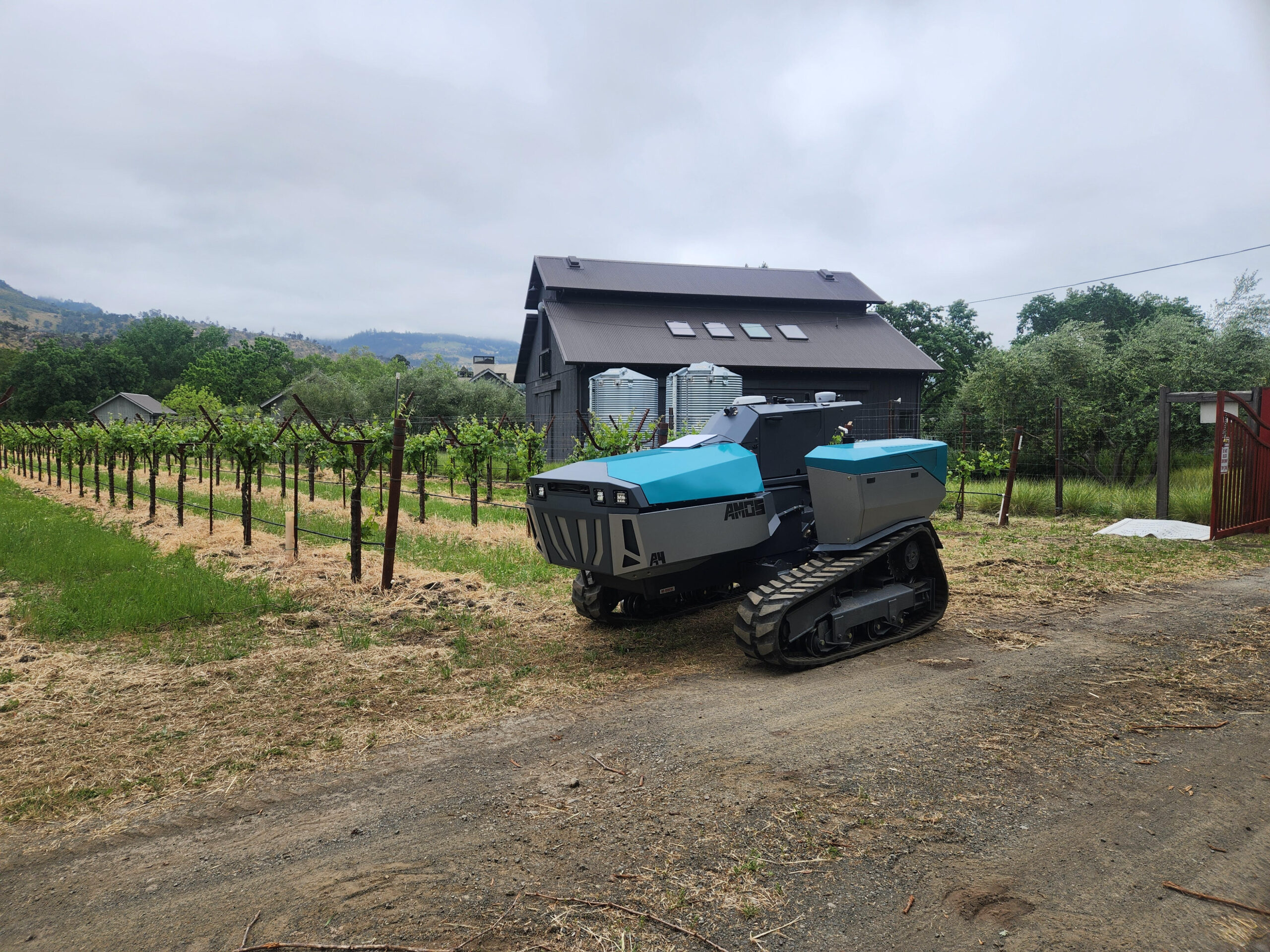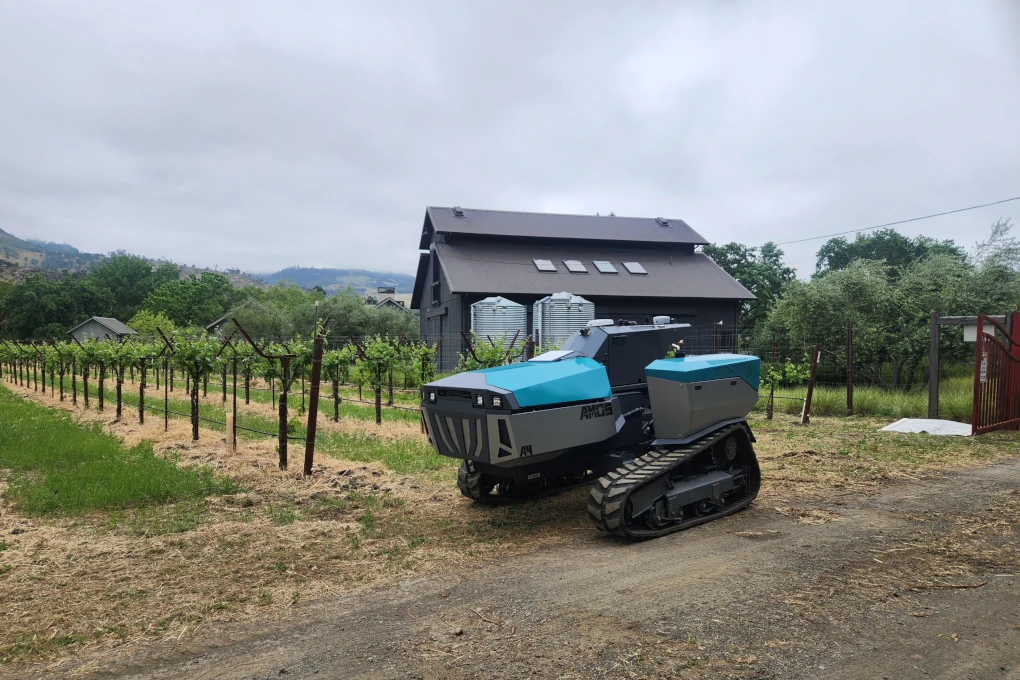
California based agritech company FarmX that specializes in farm management solutions and autonomous vehicle retrofits has acquired Amos Power, a developer of fully electric autonomous tractor technology, along with additional funding to accelerate the global deployment of its AI-powered farming platform.
The acquisition supports FarmX’s efforts to develop a more integrated agriculture system that brings together software, autonomy and electric farm equipment. By incorporating Amos Power’s electric tractor platform with its existing computer vision, machine learning and autonomy software, FarmX is working toward a single operating platform for automated field operations.
In a world being reshaped by AI, we are building a truly data-driven AI agriculture platform. By combining electric autonomous machinery with FarmX’s AI, machine learning, and vision-based intelligence, we are creating systems that don’t just automate tasks, but learn from the farm, adapt to changing conditions, and continuously optimize how food is produced.
FarmX said its perception-based software is designed to support autonomous navigation, obstacle detection, row following and task execution across various agricultural environments, including orchards, vineyards, row crops and indoor operations, as well as areas where GPS coverage is limited or unavailable.
The combined system is intended to support autonomous navigation and task execution using real-time perception, sensor data and crop-level analytics across different farming conditions. FarmX expects initial integrated production deployments to follow a unified development roadmap, with rollout planned from 2026.
Expanding Autonomous Field Operations
For existing Amos Power customers, the integration is expected to extend autonomous functionality beyond workflows that rely primarily on GPS. FarmX’s perception-based software is designed to support navigation, obstacle detection, row following and task automation in orchards, vineyards, row crops and indoor or GPS-constrained environments, while generating operational data that can be used to refine system performance over time.
Also read: Cibus Participates in UK Government Precision Breeding Research Project
Alongside the acquisition, FarmX has raised additional funding to support platform integration, customer support and manufacturing scale-up. The company has expanded operations in India, Japan and Australia, and reports partnerships aimed at higher-volume manufacturing across multiple regions. Integrated production deployments are planned to follow a unified development roadmap starting from 2026.
FarmX developis autonomous and data-enabled systems for farming operations. Its platform integrates computer vision, autonomy, robotics and farm management software to support automated field tasks and data-driven decision-making. The company operates through a mix of direct presence and partnerships in North America, India, Japan and Australia, with a stated focus on scaling automation technologies for use across different farm sizes and production systems.
Testing Paths to Farm Autonomy
The acquisition of Amos Power by FarmX suggests a continued push among agritech firms to align autonomy software more closely with purpose-built hardware, without fully committing to vertically integrated manufacturing models at the outset. Rather than positioning autonomy purely as an add-on, the move points to an interest in shaping how electric tractors and perception-based systems are developed together, potentially reducing friction between software updates and machine operation over time.
The emphasis on perception-led autonomy, particularly in environments where GPS is unreliable, may indicate a shift in how autonomous systems are evaluated in real-world farm settings. Orchards, vineyards and indoor operations present constraints that differ from open-field row cropping, and FarmX’s approach could be an attempt to prioritise adaptability over scale in early deployments. This may also reflect grower demand for systems that operate across diverse production contexts rather than single-crop use cases.
More broadly, the transaction highlights how consolidation in agricultural autonomy may unfold incrementally, with acquisitions used to test integration strategies before wider rollout. As capital, hardware and software cycles continue to converge, the success of such models may depend less on technical capability alone and more on how reliably these systems can be deployed, supported and maintained across different regions and farm sizes.