
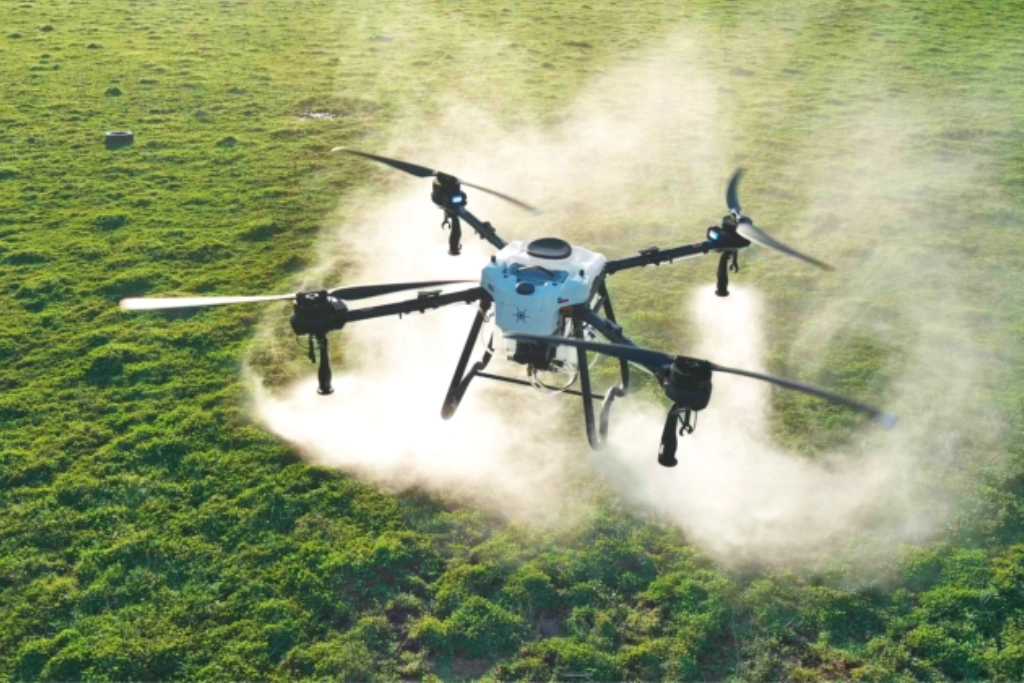
Texas-based energy management platform KULR Technology Group has entered into a joint development collaboration with agricultural drone manufacturer Hylio to advance battery systems for unmanned aerial applications. The partnership will support the design, prototyping, qualification, and domestic manufacturing of battery systems compliant with the National Defense Authorization Act (NDAA), intended for integration into Hylio’s unmanned aerial systems (UAS) serving agricultural and defense-adjacent markets.
Under the agreement, the two companies will jointly develop energy storage solutions aimed at customers requiring certifiable, domestically manufactured systems for government, defense, and critical infrastructure use cases, while also enhancing performance and reliability in commercial agricultural operations. Engineering, integration, and manufacturing activities are expected to be carried out in Texas, with a focus on strengthening domestic supply chains.
Domestic, NDAA-compliant energy storage is becoming a foundational requirement for advanced unmanned and defense-adjacent systems. Our joint development collaboration with Hylio reflects a shared commitment to U.S.-based design and manufacturing and positions both companies to support customers seeking high-reliability battery solutions built in Texas.
According to Research and Markets, the global agricultural drone market is projected to grow from $4.08 billion in 2026 to $8.65 billion by 2032, reflecting a compound annual growth rate (CAGR) of 13.21%. KULR stated that increasing regulatory scrutiny and evolving federal procurement standards are driving demand for domestically manufactured, NDAA-compliant components across both commercial and public-sector UAS deployments.
Aligning Manufacturing with Compliance Standards
The collaboration aligns with KULR’s broader strategy to expand its US manufacturing footprint and supply compliant battery platforms for regulated and mission-critical environments where safety, certification, and supply-chain integrity are central requirements. For Hylio, the agreement supports its focus on US manufactured UAS platforms designed to meet evolving federal and operational standards.
Also read: Upside Robotics Secures $7.5M to Expand Autonomous Fertilizer Systems
The companies plan to assess multiple battery chemistries, pack configurations, and manufacturing approaches under the agreement, with the aim of supporting both current and next-generation Hylio platforms across commercial agriculture, public-sector initiatives, and defense-related applications.
We are focused on delivering high-performance, American-made drone platforms to farmers and government customers alike. Partnering with KULR on domestically engineered and manufactured battery systems strengthens our supply chain, enhances performance capabilities, and supports the growing demand for NDAA-compliant UAS solutions.
For Hylio, the partnership reflects a strategic move to vertically strengthen its technology stack by securing domestically engineered and manufactured battery systems tailored to its unmanned aerial platforms. The collaboration is positioned to enhance performance reliability, ensure compliance with federal procurement standards, and reduce supply chain risk, particularly as demand grows for NDAA-compliant systems across commercial agriculture and government-linked deployments.
Strengthening Domestic Drone Supply Chains
The joint development collaboration between KULR Technology Group and Hylio signals a deeper convergence between energy storage innovation and unmanned aerial systems tailored for regulated environments. By focusing on NDAA-compliant battery systems designed and manufactured domestically, the partnership addresses two parallel industry shifts, tightening federal procurement standards and the increasing operational demands placed on agricultural drones.
Battery performance remains a critical determinant of drone endurance, payload efficiency, and operational safety. For agricultural applications, where spray windows are narrow and field coverage requirements are expanding, reliable and certifiable energy systems directly influence productivity. At the same time, public-sector and defense-adjacent deployments require traceable supply chains and components aligned with federal compliance frameworks. Anchoring engineering and manufacturing efforts in Texas also reflects a broader push toward domestic sourcing amid geopolitical and regulatory uncertainty.
From a market perspective, as agricultural drone adoption accelerates globally, manufacturers are under pressure to differentiate not only on autonomy and software capabilities but also on energy reliability and compliance readiness. This collaboration positions both companies to respond to that shift, integrating performance optimization with supply-chain integrity two factors increasingly central to long-term competitiveness in the UAS sector.


