
Gurugram-based climate-tech company Varaha has launched the Varaha Industrial Partners Program (VIPP) to support biomass facilities in generating carbon removal credits. The initiative is focused on equipping biomass processing facilities with access to sustainable biomass feedstocks to generate high-integrity carbon removal credits using Varaha’s digital MRV and commercialization platforms.
As its first project, VIPP will include a partnership with Revata Carbon and Valency International in Côte d’Ivoire. The West African nation is a major hub in the global cashew economy, and as it continues to grow, the processing of byproducts like cashew shells has become an environmental challenge. The residues from cashew have high-value end uses but continue to be a persistent waste management and disposal challenge, with much of the material ultimately being burned.
We’re excited to welcome Valency International and Revata Carbon as VIPP launch partners. Valency and Revata’s on-the-ground development leadership, combined with industrial delivery and Varaha’s rigorous MRV and commercialization, creates a strong foundation to scale durable carbon removal in West Africa and beyond.
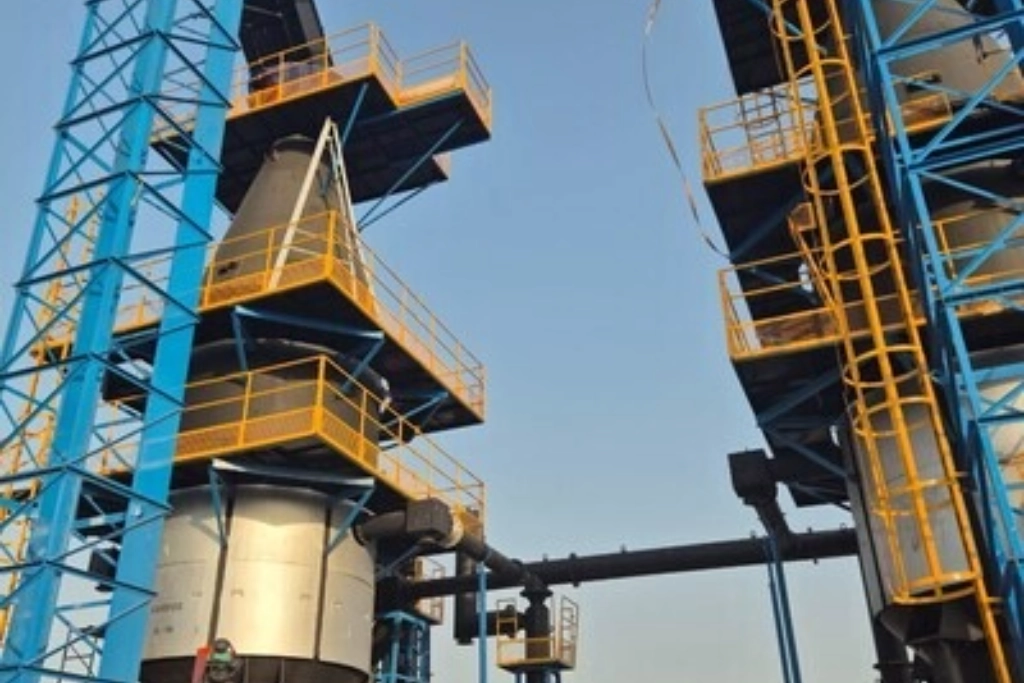
The VIPP Côte d’Ivoire project will focus on converting cashew shells into high-quality biochar through controlled gasification. The processed biochar will be directed to relevant end uses as a soil amendment, supporting long-term carbon storage and improving soil fertility for farmers.
Defined MRV and Supply Roles
Under the VIPP project, Varaha will be responsible for measurement, reporting, and verification (MRV) and management of carbon credits. The company will also lead marketing, including structuring and executing sales to corporate and institutional buyers, with credits issued in partnership with Puro.earth under its biochar methodology.
Also read: Source.ag Launches Sensor-Free PAR Reconstruction Tool
Revata Carbon will take charge of the in-country origination and development, building the feedstock ecosystem, coordinating local stakeholders, and operating the conversion of cashew shells and other residues into high-quality biochar via controlled gasification.
Revata Carbon is glad to be joining forces with Valency International and Varaha (VIPP) to help deliver high quality carbon credits with our biochar assets and agri-waste management expertise. It is an important opportunity for us to showcase Africa’s capabilities in being a responsible geography for biochar projects. This partnership signifies a big step in achieving our goal of helping integrate agricultural waste as an asset while supporting local communities and industries.
Valency International, a British International Investment (BII)-backed global agribusiness and major cashew processor, will be responsible for supplying feedstock and providing supply chain expertise to scale the project as part of its effort to decarbonise agricultural value chains and drive sustainable development and employment through targeted investment in West Africa.
Industrial Biochar Partnership Model
Varaha’s launch of the Varaha Industrial Partners Program (VIPP) in Côte d’Ivoire may signal a deeper push toward integrating carbon markets with agro-industrial waste streams. By anchoring the initiative in cashew processing residues, the project appears to align carbon removal finance with an existing export-oriented value chain rather than creating a parallel ecosystem. This could reduce feedstock risk, which has historically constrained biochar scale-up efforts.
Our partnership with Revata Carbon reflects Valency’s intent to actively decarbonise our value chains, starting with cashew, where we have large processing operations and generate significant by-products. Working with Revata allows us to convert these residues into a scalable, climate-positive solution embedded directly within our operations. We are also pleased to work with Varaha as our carbon credit marketing partner, bringing robust MRV and market access to the project. Together, this collaboration demonstrates how industrial agribusiness platforms can move from ambition to execution in delivering durable carbon removal.
The involvement of Revata Carbon and Valency International suggests a structure that distributes operational, supply chain, and commercialization responsibilities across specialized actors. Such a model, if effective, may indicate how climate-tech firms can expand into emerging markets without direct asset ownership. However, long-term viability will likely depend on consistent biomass availability, policy stability, and demand for high-integrity carbon removal credits.
More broadly, the initiative may test whether industrial biochar projects can move beyond pilot scale and become embedded within mainstream agribusiness operations in West Africa.


