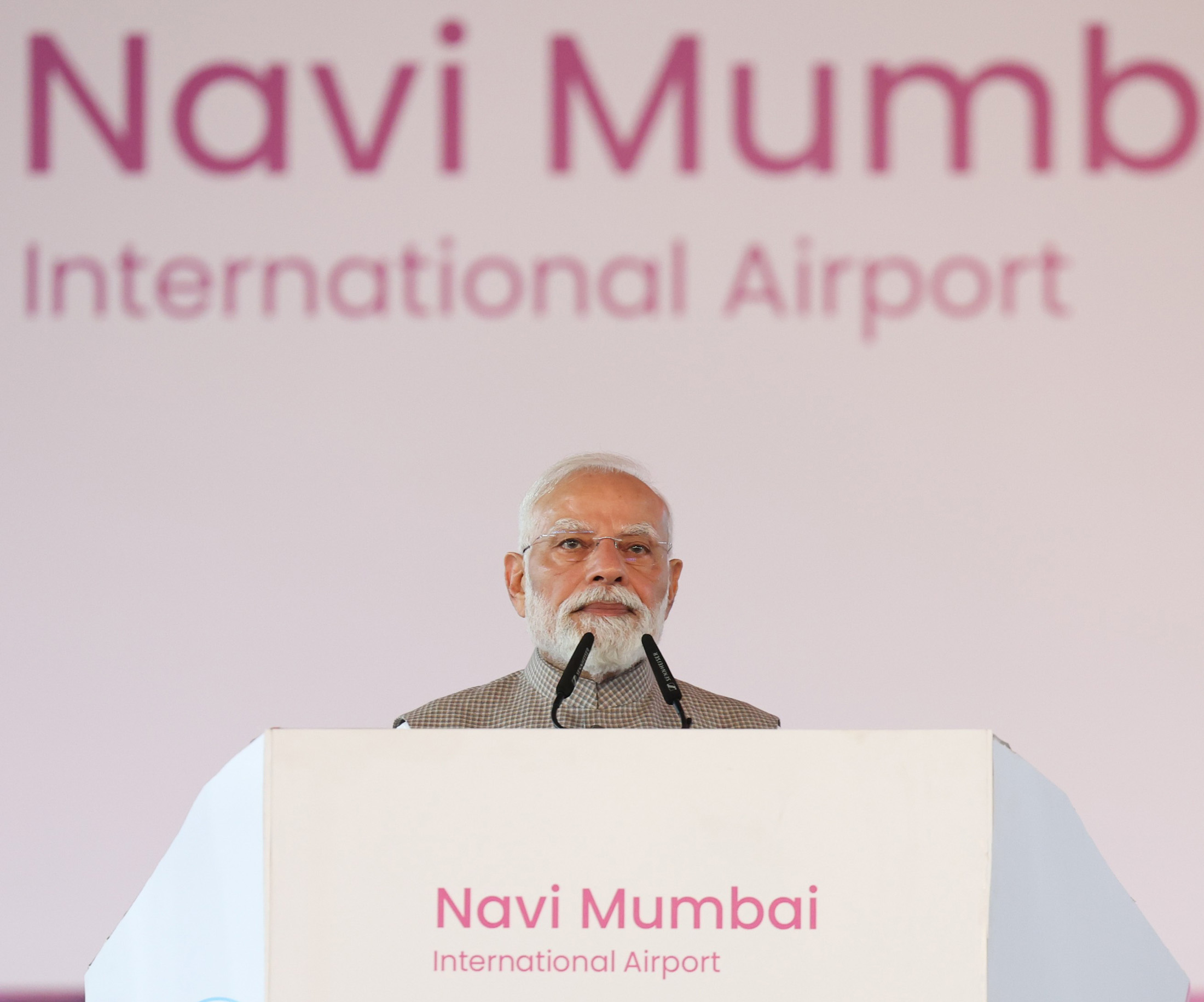
The newly inaugurated Navi Mumbai International Airport (NMAI) will open up markets for farmers in the Middle East and Europe, India’s Prime Minister Narendra Modi said.
The airport has a capacity of up to 20 million passengers annually and up to 90 million over the next few years, Adani Group – which has built the airport – said in a statement.
“This new airport will connect Maharashtra’s farmers directly with the international supply chain, including supermarkets in Europe and the Middle East. This means that the farmers’ freshest produce — fruits, flowers, vegetables, and the products of our fisherfolk — will be able to reach the global market rapidly,” PM Modi said during the inauguration.
The NMIA, India’s largest Greenfield airport project, has been developed through a Public-Private Partnership (PPP), with Adani Airports Holdings holding 74% and the City and Industrial Development Corporation of Maharashtra (CIDCO) holding 26%. NMIA sits on a 1,160-hectare site in Ulwe, with an Automated People Mover (APM), a transit system to help passengers move easily between terminals. Another APM will connect the airport to the surrounding city, making travel smoother and more convenient for visitors.
As the second international airport for the Mumbai Metropolitan Region, NMIA will complement Chhatrapati Shivaji Maharaj International Airport (CSMIA), helping reduce congestion and positioning Mumbai among the world’s leading multi-airport cities. Once fully operational, NMIA will feature four terminals and is expected to handle 3.25 million metric tonnes of cargo each year.
NMIA Integrates Logistics and Sustainability
NMIA is introducing several firsts in Indian air cargo, including a fully automated terminal with AI monitoring that can cut turnaround time by 40%. It also features a Pharma Excellence Centre with GDP-compliant cold zones and a dedicated perishable cargo village.
Crucially, NMIA’s proximity (20 km) to the Jawaharlal Nehru Port Trust (JNPT) creates an integrated logistics cluster for sea-air transshipment. This dual-engine strategy is expected to support key sectors like agriculture and pharmaceuticals. The airport is also designed with sustainability in mind, incorporating features like solar power and rainwater harvesting.
For the small and micro-scale industries in the area, this infrastructure will reduce logistical costs. It is set to attract increased investment, fostering the creation of new industries and ventures. I extend my heartiest congratulations to all the people of Maharashtra and Mumbai.
In line with sustainable practices, the airport will feature dedicated storage for Sustainable Aviation Fuel (SAF), generate around 47 MW of solar power, and operate electric buses for public connectivity across the city. NMIA will also be the first airport in the country to be connected by Water Taxi.
Also read: Brio Hydroponics Launches Phase 2 of ‘Unnati’ Park in Gujarat
During the inauguration, Prime Minister Narendra Modi stated that India has now become the world’s third-largest domestic aviation market. He also affirmed the government’s plan to make India a major Maintenance, Repair, and Overhaul (MRO) hub by the end of this decade.
Over the past decade, the government has opened and upgraded dozens of airports to connect smaller cities and improve cargo movement, aiming to make air travel a key driver of economic growth. The total number of airports in India has risen to 160 from 74 in 2014.
NMIA to Expand Agribusiness Potential
According to the International Air Transport Association (IATA), a 1 per cent increase in air connectivity can boost GDP by 0.5 per cent. With Navi Mumbai seamlessly integrated into global flight paths, Maharashtra could experience substantial economic growth over the next decade.
Pune is just 2.5 hours from NMIA, cutting air cargo transit times and lowering export costs. The upcoming airport in the Mumbai-Pune Industrial Region (MPIR) has the potential to boost investment and improve connectivity, supporting sectors like agribusiness. By enhancing infrastructure, it could make agribusiness supply chains more efficient, lower export costs, and strengthen Maharashtra’s role in global agricultural trade, positioning the region as a future hub for domestic and international agri-exports.
3.2 million metric tonnes of cargo can be handled annually at the Navi Mumbai airport. And it would boost exports for industries in Pune district, including electronics, pharmaceuticals, agri-processing sectors, and the automobile sector.
Like NMIA boosting Maharashtra’s agricultural exports, Noida International Airport (NIA), set to open on 30 October 2025, could transform Uttar Pradesh’s agribusiness logistics. Its multi-modal cargo hub, capable of handling 2.5 lakh metric tonnes annually, will enable faster movement of perishables, vegetables, and high-value crops to global markets, reducing transit time and post-harvest losses. The state government’s agri-export facility near the airport will provide quality checks and treatment for international standards.
Together, these developments strengthen supply chains, improve farmer incomes, and expand Maharashtra and Uttar Pradesh’s reach to key global markets.