
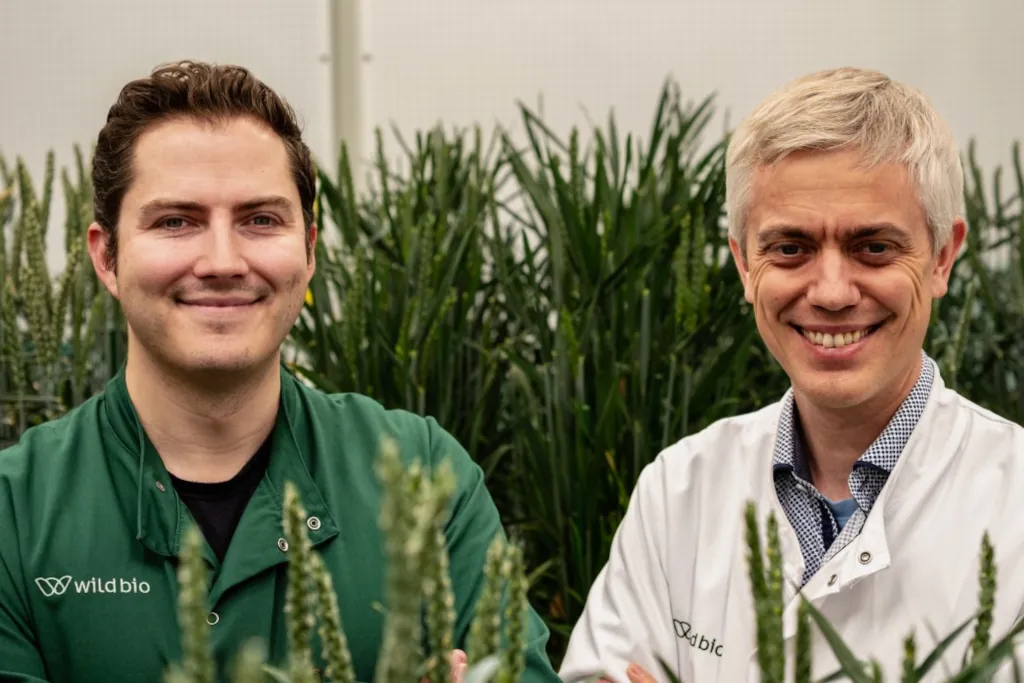
UK agritech comapny, Wild Bioscience has raised £45 million ($60 million) in a Series A round led by the Ellison Institute of Technology (EIT), alongside Oxford Science Enterprises (OSE), Braavos Capital, and the University of Oxford.The funding will support Wild Bioscience’s efforts to develop climate-smart crops by leveraging AI to unlock evolutionary insights from plant genomes, enhancing yield, resilience, and sustainability in the face of climate change.
Combining the groundbreaking research at EIT and Wild will create a powerful synergy that could reshape sustainable agriculture on a global scale. Together, we will accelerate our ability to bring new technologies to market and deliver innovative solutions that enhance crop resilience, boost yields, and promote environmental sustainability.
Founded by Ross Hendron and Steven Kelly in 2021, Wild Bioscience started as a spin out from the University of Oxford. Originally initiated as a university research project, the initiative has rapidly expanded into a dedicated team of 30 professionals conducting field trials across four countries.The team is focused on translating scientific discoveries into tangible outcomes for global agriculture.
Wild Bioscience Harnessing Evolutionary Insights
The platform collects insights from hundreds of millions of years of plant evolution to uncover valuable genetic traits found in wild species, applying these discoveries to guide precision breeding and enhance modern elite crop varieties.The objective is to develop a new generation of climate-smart crops designed to deliver higher yields while minimizing environmental impact
Also read: Reservoir Opens On-Farm Innovation Hub in Salinas to Accelerate Agtech Collaboration
Using AI, the company reads and writes plant genomes to accelerate the development of new crops. The precise gene editing technology can deliver faster results than traditional GMO development. The resulting crops are known as precision-bred organisms (PBOs).
This approach can help farmers meet crop quotas, allowing them to support wider sustainability practices associated with high intensity farming, including soil regeneration, rewilding, greenhouse gas mitigation.
I’m deeply grateful to EIT and to our current investors for sharing our excitement about what we’ve accomplished so far, and for their united support as we embark on this ambitious growth journey together
The organisation aims to leverage agricultural advances in order to drive for both people and the planet.Achieving meaningful and scalable impact demands investors who share a long-term vision and are dedicated to fostering sustainable, transformative growth in agriculture.According to OSE, the platform has delivered double-digit improvements in yield components, increased drought resilience, and enhanced carbon sequestration in soils.
Investor Perspective
This investment marks a notable step for the Oxford innovation ecosystem, representing the first joint venture investment by EIT and Oxford Science Enterprises.With the fresh funding the Wild Bioscience team can expand their R&D and commercial operations, translating research findings into market ready seed varieties.
Wild Bio is using AI to better understand the lessons learned over millions of years of evolution encoded in plant genomes. The ultimate goal is to grow these new crop varieties on a commercial scale and help provide food security around the world. EIT is committed to working with Wild Bio to reach this goal.
Ed Bussey, Chief Executive Officer of Oxford Science Enterprises (OSE), expressed enthusiasm about partnering with the Ellison Institute of Technology (EIT) for the first time as co-investors in Wild Bioscience.He noted that Ross Hendron was one of OSE’s early Entrepreneurs-in-Residence, and that Wild Bioscience represents a strong example of how OSE’s venture-building model supports Oxford scientists in transforming breakthrough research into globally impactful businesses.
He further added that the investment from EIT can be clearly seen as an endorsement of Wild Bioscience’s scientific strengths and is expected to accelerate the company’s mission to improve crop resilience and contribute to a more sustainable food system.


