
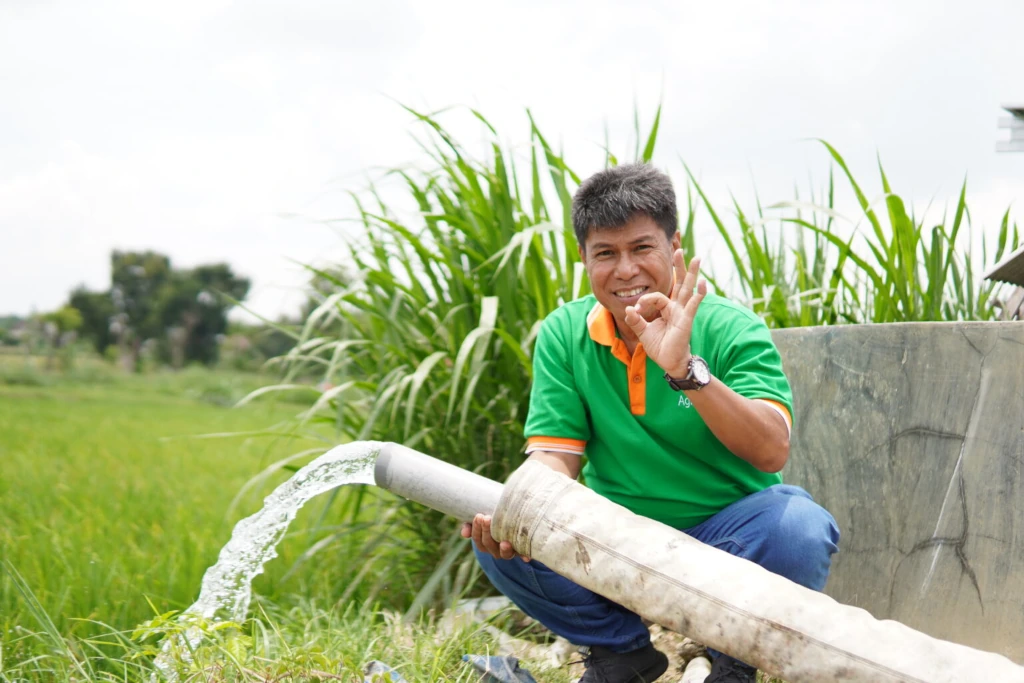
Agros, a Singapore-based agritech company focused on solar-powered irrigation systems, has secured a $2 million working capital facility through the Electrification Financing Initiative (ElectriFI), a blended finance facility managed by EDFI Management Company (EDFI MC). The facility is intended to support Agros’s operations and deployment activities across smallholder farming markets in Cambodia and Indonesia.
The funding is designed to help the expansion of Agros’ pay-after-harvest financing model for solar irrigation, aiming to position solar pumps as a bankable asset while reducing emissions, cutting fuel costs, and strengthening farm incomes. By linking repayments to harvest cycles, the company aims to reduce upfront capital requirements that can delay or prevent technology uptake among smallholder farmers.
Our partnership with ElectriFI is a major step forward in our mission to help farmers grow more with less risk and less pollution. From the moment a farmer decides to switch from diesel to solar, we are committed to being a trusted partner that helps them increase income while shrinking their carbon footprint.
Agros develops and distributes solar water pumping systems designed to replace diesel-powered irrigation, particularly in areas where grid electricity is unreliable or fuel costs are high. The systems are used across crops such as rice and vegetables, where consistent irrigation is closely linked to yields and cropping cycles.
By shifting energy inputs, the technology reduces dependence on fossil fuels and lowers operating costs for farmers, while also reducing emissions associated with irrigation.
Agros Targets Irrigation’s Energy Transition
The funding will support a transition away from diesel-powered irrigation toward solar-based systems, with the potential to reduce fuel use and associated emissions while lowering ongoing energy costs for farmers.
Improved access to reliable irrigation may contribute to more consistent crop management and production outcomes, although impacts on yields and incomes will depend on local agronomic and market conditions.
Also read: Agroz Develops Capability for Japanese Strawberry Cultivation Using AI Enabled Farming
The investment follows pilot activity in Indonesia, where initial deployments have suggested interest in alternative irrigation options, indicating possible demand for non-diesel systems in comparable smallholder settings.
Agros’s core service, Agrosolar, is a solar-powered irrigation system designed as an alternative to diesel-based water pumping for small and medium-scale farms. The system uses photovoltaic panels to power water pumps, enabling irrigation in areas with limited grid access or high fuel costs.
Agros’ model shows how clean energy and smart financing can directly improve smallholders’ resilience and incomes while cutting emissions. Supporting Agros’ growth in Indonesia and Cambodia is closely aligned with our mandate to mobilise private investment for climate action and inclusive economic development in emerging markets.
EDFI ElectriFI said the facility is intended to support business models that integrate renewable energy technologies with inclusive financing mechanisms in emerging markets, where access to capital and infrastructure remains uneven. For such settings, products like Agros’s Agrosolar systems are designed for deployment across typical smallholder farm environments in Southeast Asia, where irrigation reliability and seasonal cash flows often constrain investment in conventional pumping infrastructure.
Aligning Energy Finance with Agritech
Agros’s working capital facility from EDFI ElectriFI illustrates a familiar but often under-examined dynamic in agritech scale-up, the importance of financing structures over product novelty.
Solar-powered irrigation is not new, but its adoption among smallholders has consistently been constrained by upfront costs, fuel substitution risk, and uneven cash flows rather than technical performance. In this context, the emphasis on working capital and pay-after-harvest deployment reflects an attempt to align technology delivery with farm-level financial realities.
The transaction also highlights the role development finance institutions continue to play in bridging gaps that commercial capital is reluctant to address, particularly for asset-heavy models operating in emerging markets. By supporting inventory and deployment rather than equity expansion, the facility prioritises operational continuity over rapid geographic growth.
More broadly, the funding sits at the intersection of energy access and agritech, where irrigation remains a critical productivity lever but is increasingly shaped by fuel volatility and climate pressures. Whether such models translate into sustained farmer adoption will depend less on technology efficiency and more on repayment performance, service reliability, and local agronomic outcomes.


