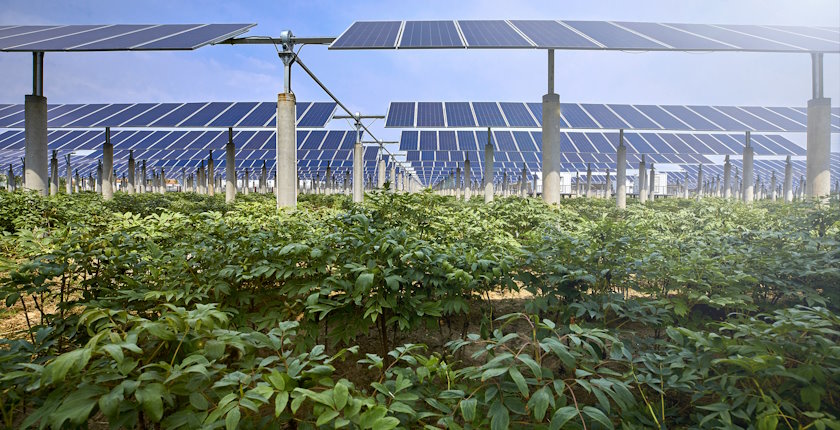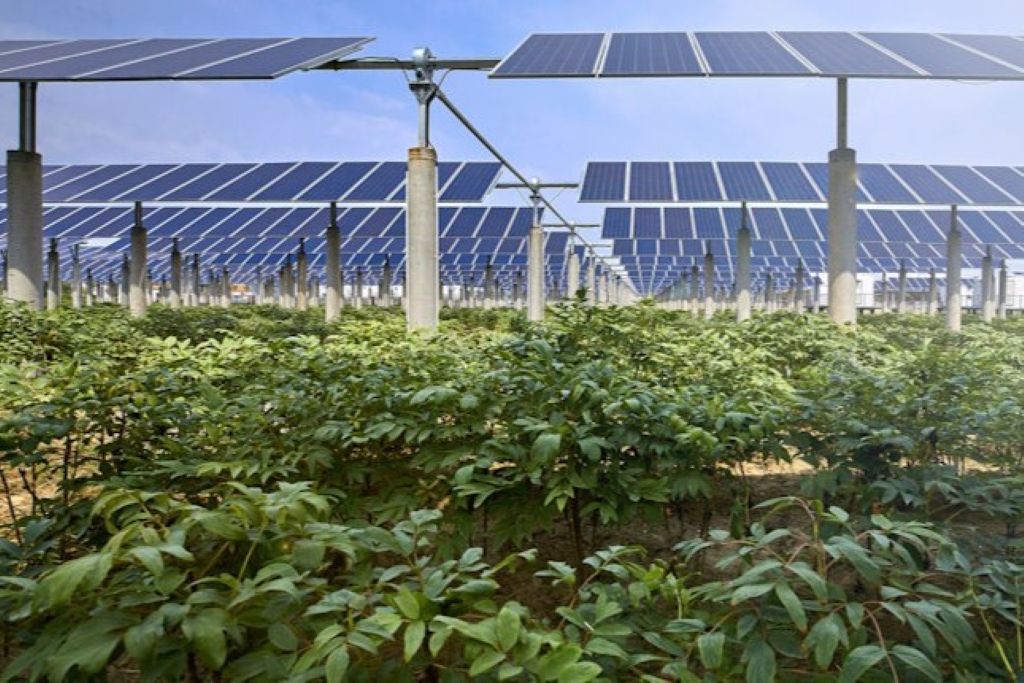
Okovate Sustainable Energy, a company focused on developing agrivoltaic projects, has acquired the assets of Fundusol, a modeling platform developed through research originating at Stanford University and Carnegie Mellon University. The transaction, supported by Okovate’s backing from The Schmidt Family Foundation, is positioned to deepen data driven approaches in the co-location of solar energy systems and agricultural production.
The acquisition enables Okovate to integrate Fundusol’s proprietary modeling engine directly into its agrivoltaic project development pipeline. The technology stack is designed to simulate interactions between solar array architecture and crop phenology, allowing for detailed analysis of how energy infrastructure and agricultural systems perform together. With this integration, Okovate is expanding its role beyond conventional solar development toward providing technical data support to farming communities.
Integrating Modeling and AI Into Farm Centric Solar Design
According to Okovate, the combined platform incorporates genomic optimization and advanced irradiance modeling to improve crop projection accuracy. Fundusol’s system is being used as a foundation for predictive AI tools intended to translate complex solar engineering parameters into insights that can be applied at the farm level.
Miles Braxton, CEO of Okovate, stated that the acquisition aligns with the company’s objective of making agrivoltaics a dependable, data driven option for farmers in the United States. He explained that the modeling platform supports the development of AI based tools capable of converting technical solar data into information that helps farmers understand expected outcomes, supporting economic planning at the community level.
Scientific Framework Behind the Integrated Platform
At the core of the platform is the SIMulated PLant Ecosystem (SIMPLE) crop biomass model, which is used to project outcomes for more than 60 crop types. This framework is combined with proprietary irradiance and thermal dynamics models to analyze how crops respond to the presence of solar infrastructure. The system applies a custom, in house genetic algorithm to identify optimal solar array configurations, including panel spacing, height, and tilt, based on the light saturation requirements of specific crops.
The platform also models crop responses to microclimates created beneath and around solar arrays, offering detailed projections of phenological behavior. Visualization tools, including three dimensional system representations and digital twins, are used to help farmers and landowners assess proposed farm layouts before construction begins, enabling clearer planning discussions.
Reinforcing an Agriculture-First Approach
Okovate has described the acquisition as reinforcing its “Agriculture First” philosophy. By embedding Fundusol’s modeling capabilities into its operations, the company aims to scale agrivoltaic systems while maintaining land productivity and farm-level financial stability. The approach prioritizes farming needs alongside energy generation, using AI driven insights to inform land management decisions.
Also read: ThinkAg Roundtable Explores How Farmer Collectives Can Drive Tech Adoption
Fundusol’s AI tools analyze field level data such as soil conditions, weather patterns, and crop performance to guide panel placement and operational choices. These insights extend to decisions around planting schedules, irrigation strategies, and livestock grazing under solar installations, with the objective of maintaining yields while accommodating energy infrastructure. The modeling also supports risk assessment related to shading and its effects on photosynthesis.
Implications for Farmers and Rural Economies
For farmers, the integrated platform is intended to support improved lease structures with solar hosts while providing operational data that can reduce uncertainty and support productivity. By layering clean energy revenue onto existing agricultural activities, the model seeks to strengthen rural income streams without displacing food production. The system is also positioned within broader climate adaptation efforts by encouraging land use practices that combine renewable energy generation with sustainable agriculture.
Broader Context for Agrivoltaics
The acquisition reflects increasing convergence between agritech, artificial intelligence, and renewable energy development. By enabling dual use landscapes that support both energy generation and food production, the model addresses land constraints associated with expanding renewable capacity. Okovate has indicated that the integration of Fundusol’s platform could inform scalable agrivoltaic practices beyond the United States, contributing to discussions on food security and energy transition in land constrained environments.