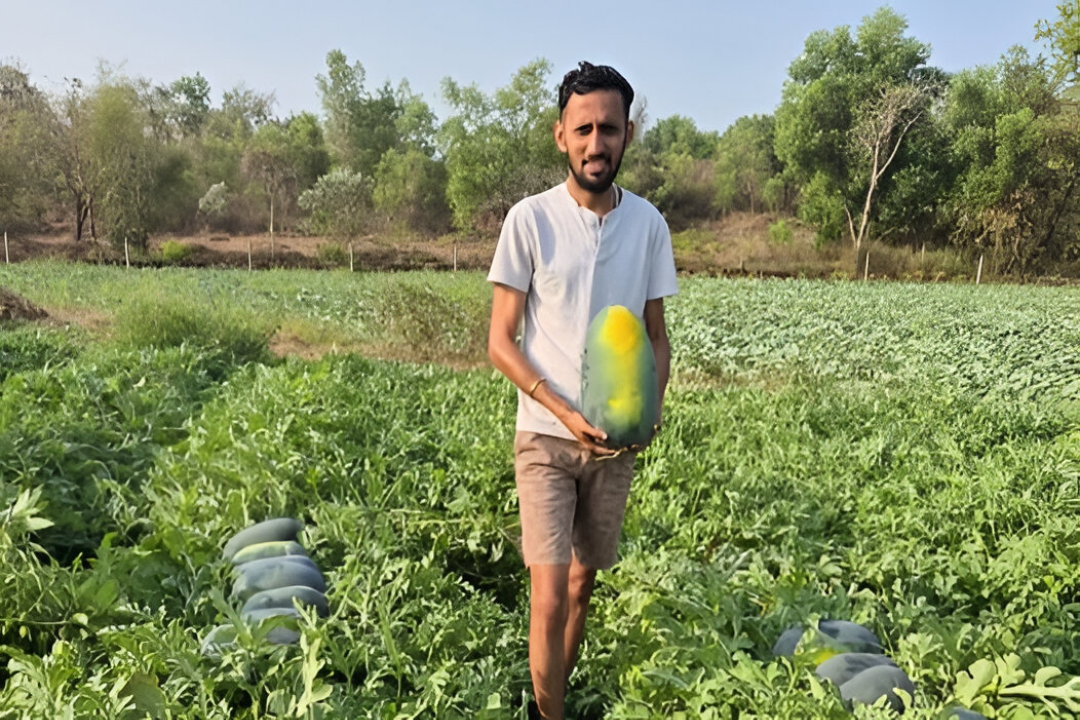
Goa has appointed 32-year-old farmer Varad Samant as its agriculture brand ambassador, with the objective of encouraging young people to view farming as a viable and sustainable livelihood. The appointment draws on Samant’s progression from an initially hesitant cultivator to a large scale vegetable producer supplying substantial quantities to the state’s procurement system.
According to media reports, Chief Minister Pramod Sawant, while announcing the decision in Panaji, said Samant’s journey showed what agriculture can accomplish with mechanisation, better practices and government support. He noted that over the past three years, the state had procured vegetables worth INR 65 lakh, INR 60 lakh and INR 58 lakh from Samant, emphasising that these payments were made for produce cultivated entirely within Goa.
From Commerce Graduate to Full Time Cultivator
Samant’s entry into farming was unplanned. After completing a B.Com degree in 2012, agriculture was not part of his career plans, despite his family’s background in farming. Between 2010 and 2014, his family cultivated sugarcane, but it was only later that he began exploring vegetable farming. To understand the sector better, he travelled to Karnataka and Maharashtra, studied cultivation practices, and returned to Goa to experiment on a small scale.
He started by growing bhindi on approximately 2,000 square metres. The success of the crop encouraged him to expand into cucumbers, carrots, cabbage and other vegetables. Reflecting on this phase, Samant said it was then that he realised vegetable cultivation was feasible in the state. A resident of Dharbandora, he gradually scaled up operations by combining traditional farming knowledge with mechanised methods.
Production Scale and Economics of Vegetable Farming
At present, Samant cultivates vegetables on around 10 acres of land. His crops include cabbage with a 70 day cycle, carrots that mature in about 20 days, and watermelons that are ready for harvest in roughly 60 days. He explained that watermelon cultivation alone could be financially rewarding, noting that at a market price of INR 30 per kg, a yield of 20 tonnes could generate about INR 6 lakh within two months.
Annually, Samant supplies 70 to 80 tonnes of cabbage to the horticulture department, along with 4 to 5 tonnes of carrots, sometimes reaching up to 10 tonnes, in addition to bhindi and other vegetables. These supplies are distributed to consumers through vendors of the Goa State Horticulture Corporation.
Also read: India Post & Agri Ministry Partner for Nationwide Sample Logistics Framework
According to Samant, his annual receipts range between INR 50 lakh and INR 60 lakh, with farmers typically able to retain a profit margin of around 25 to 30 per cent after accounting for labour and other costs. The chief minister added that Samant had informed him his net profit was around INR 30 lakh from vegetable cultivation alone. Sawant also said that Samant employs between 20 and 22 workers and farms on not more than 60,000 square metres of land.
Role as Agriculture Brand Ambassador
Speaking about his appointment, Samant said he had never anticipated being given such a responsibility. He explained that the chief minister had recently contacted him and asked him to take on the role of creating awareness about vegetable farming across Goa. Officials said Sawant had visited Samant’s fields and was impressed by the crop management and farming practices in place.
Agriculture Director Sandeep Phaldesai said the appointment aligned with the government’s aim of making the state self-reliant in vegetable production. He outlined that the Promotion of Vegetables with Assured Market scheme is being implemented through the Agriculture Department and the Goa State Horticulture Corporation, with a target of achieving self-sufficiency in vegetables. He added that Samant would conduct sessions, demonstrations and lectures across all talukas to promote vegetable cultivation.
Government Support and Changing Perceptions
Samant attributed much of his progress to government schemes, particularly the assured price mechanism. He pointed out that bhindi growers receive INR 50 per kg throughout the year under the scheme, a pricing assurance he said was not available in other states. He also noted that several young people from his village had shown interest in farming and frequently visited his fields, citing Mahesh Goankar and members of the Verdikar family as examples.
Addressing prevailing perceptions, Samant said there was a common belief that farming was not feasible in Goa, a view he felt needed to change. He maintained that with commitment and institutional support, farmers could cultivate crops successfully and earn a stable income. He also urged people to safeguard agricultural land, warning that the loss of farmland would affect food security. Looking ahead, he said agriculture would present more opportunities after 2030 with the wider adoption of mechanised and automated techniques.
With Samant as the face of its outreach, officials said the state is seeking to communicate that agriculture can offer modern practices, financial viability and long-term prospects, particularly for younger generations in Goa.