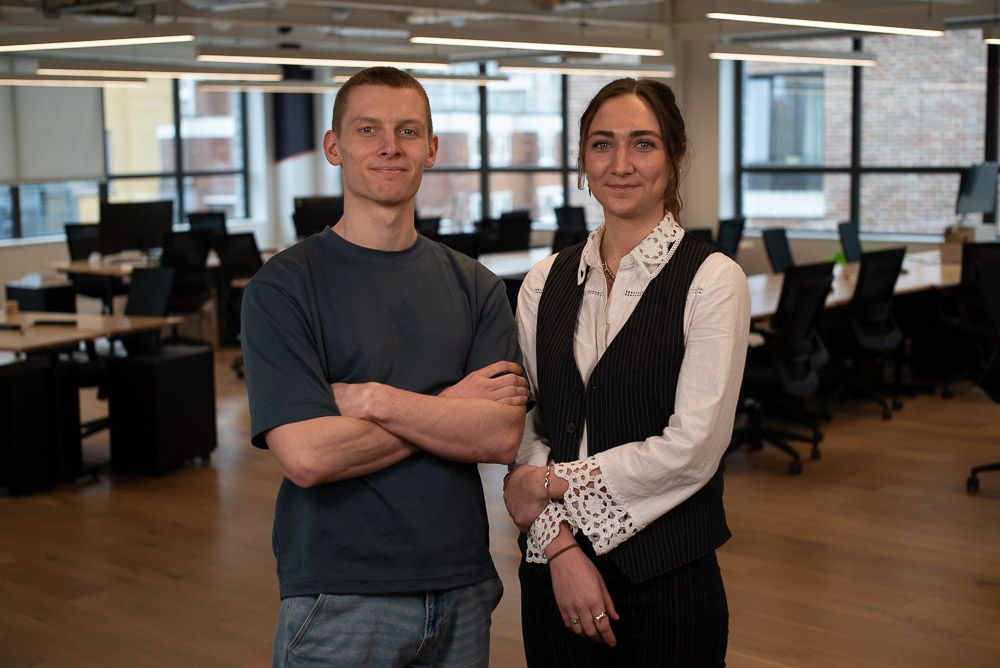
London based startup Biographica that develops artificial intelligence solutions for crop genetics has closed a £7 million ($9.5 million) seed funding round to support the development of climate-resilient and higher-yielding crops. The investment round was led by Faber VC, with participation from SuperSeed, Cardumen Capital, The Helm, and existing investors Chalfen Ventures and Entrepreneurs First.
The funding will also assist the expansion of Biographica’s proprietary data collection, extend its AI platform to new crop traits, and deepen commercial relationships across the seed industry. The development coincides with a new strategic partnership with BASF’s vegetable seeds business, Nunhems, marking an initial step toward industry collaboration.
We’ve seen AI reshape pharma, turning trial-and-error pipelines into learnable biological systems. We’re bringing that same discipline to crops. Our partnerships with BASF | Nunhems and other leading seed companies show the industry is ready for AI-first approaches to trait discovery, to bring high-value crop varieties to market in seasons, not decades.
According to Biographica, developing improved crop varieties remains costly and time-consuming. While CRISPR (Clustered Regularly Interspaced Short Palindromic Repeats) tools enable highly precise gene editing, they do not on their own identify which genes control key traits, such as drought tolerance, disease resistance, or nutritional quality or how best to modify them.
To address this challenge, Biographica says it leverages artificial intelligence to identify validated gene targets up to 12 times faster than conventional methods. The company adds that the approach not only accelerates discovery but also identifies genetic targets that are often missed by traditional techniques. According to Biographica, this could help reduce R&D timelines and costs for seed companies globally.
‘Lab in the Loop’
Traditional genetic mapping methods largely identify statistical associations between genes and traits, without establishing clear causality. Biographica says its approach applies machine learning and knowledge graphs to predict which genes are likely to have a causal influence on specific traits, enabling more targeted gene-editing decisions and improving the likelihood of achieving desired outcomes.
Also read: India Post & Agri Ministry Partner for Nationwide Sample Logistics Framework
The system is built on foundation models trained using a combination of public and proprietary genomic datasets, allowing it to operate across different crops and traits. According to the company, this design reduces the need for immediate access to sensitive partner data. Biographica adds that the platform is refined through a ‘lab-in-the-loop’ process, in which experimental results are fed back into the models to improve predictive performance over time.
Applying AI to Crop Genetics
The intersection of artificial intelligence and crop genetics is very crucial at a time when climate stress and productivity demands are intensifying across global agriculture. The company’s £7 million seed round, led by Faber VC with participation from multiple early-stage investors, reflects growing interest in computational approaches that can shorten breeding timelines rather than replace established tools such as CRISPR.
With climate change intensifying the pressure on agricultural systems, improving crop genetics is the most powerful lever we have to sustainably increase yields and build resilience. Biographica is redefining how agricultural innovations happens, and this investment round will allow them to scale their impact globally.
Biographica’s focus on causal gene discovery can potentially addresses a long-standing bottleneck in crop improvement, identifying which genes truly drive complex traits before editing begins. Its emphasis on foundation models and a ‘lab-in-the-loop’ feedback system suggests an effort to translate AI methods proven in life sciences into agricultural R&D workflows. The strategic partnership with Nunhems signals early validation from a major seed player.
More broadly, approaches that can be applied across multiple crops and traits have the potential to ease adoption within the seed industry. If successful, such approaches could help reduce development costs and shorten breeding timelines.