
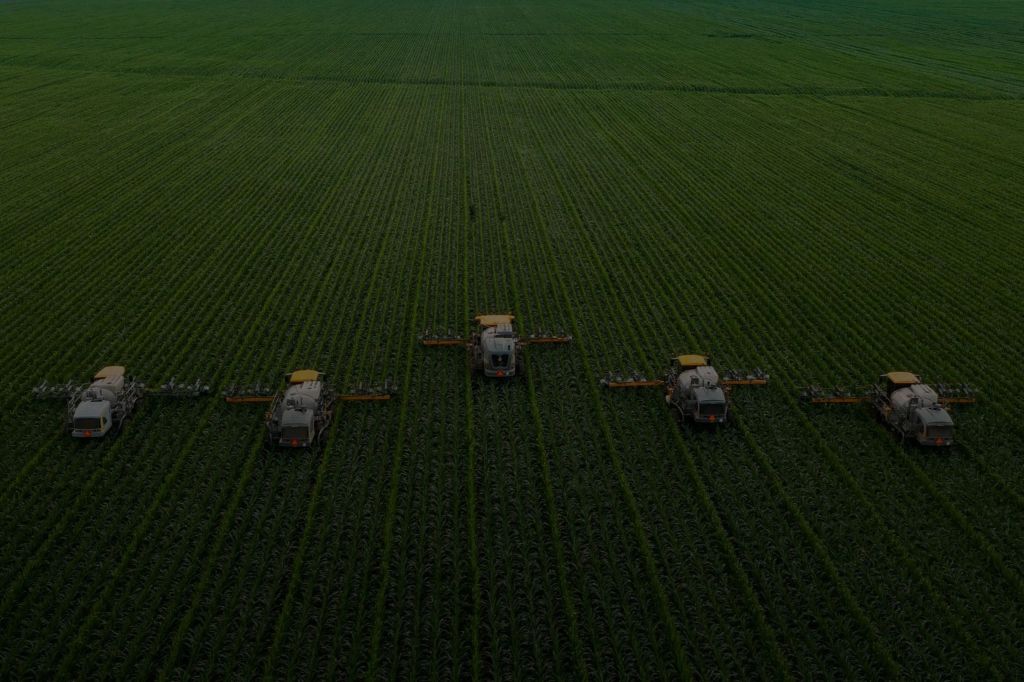
Cornell University has established a growing focus on digital agriculture, applying technology and data to agricultural management across research and education, and is positioned to receive support through a potential allocation from the University’s $30 million federal settlement. These efforts involve participants ranging from undergraduate students to faculty researchers working across disciplines.
As part of a $60 million settlement with the US President Donald Trump administration reached on November 7, Cornell University could invest $30 million in agricultural research over the next three years, with digital agriculture emerging as one of several areas that may receive a portion of the funding. Final allocations have not yet been determined.
According to an article published in The Cornell Daily Sun, the settlement’s explicit reference to digital agriculture has drawn attention from researchers across disciplines, including Julio Giordano, who studies the use of technology in dairy systems and serves as associate director of the Cornell Institute of Digital Agriculture (CIDA).
My interpretation of the settlement is that the funding is supposed to be for digital agriculture at Cornell. I’m really hopeful that this investment is directed toward improving our existing infrastructure for digital agriculture research.
Julio Giordano told The Cornell Daily Sun that the CIDA’s distinguishing feature lies in its cross-disciplinary approach, with its Research Innovation Fund offering seed grants exclusively to projects involving collaborators from different colleges and fields. He explained that these early-stage grants are intended to help projects mature and attract additional funding from federal agencies and industry partners over time.
According to Giordano, initiatives supported through CIDA’s seed funding have already gone on to secure substantial follow-on grants, and the institute currently lists 58 projects that have received such support.
Cornell AgriTech Positioned Within Settlement-Backed Research Priorities
According to the settlement, Cornell University is required to invest $30 million in research programs intended to directly benefit US farmers by lowering production costs and improving efficiency. The agreement specifies that these investments may include, but are not limited to, programs incorporating artificial intelligence and robotics, including digital agriculture and future farming technologies.
Also read: Bihar-Based Agritech Startup Agrifeeder Secures US FDA Certification
Within Cornell’s agricultural research landscape, Cornell AgriTech functions as a site for applied research and extension activities in Geneva, New York. The campus includes laboratories and approximately 900 acres of fields, orchards, and vineyards used for research and outreach across agriculture and food systems.
At Cornell AgriTech, Yu Jiang, a professor of horticulture, has conducted research since 2019 on agricultural robotics and artificial intelligence. He pointed to VitisGen3 as one of the projects based at the campus. The interdisciplinary programme examines genetic traits associated with disease resistance in grapes, with the aim of informing breeding and varietal development efforts.
Digital agriculture opens up a lot of opportunities for all of us, from research all the way down to new entrepreneurs. We need this [agricultural] workforce, and who’s going to offer these training programs? … I personally foresee AgriTech really having a strong position.
As part of the work at Cornell AgriTech, researchers are developing robotic systems to collect large volumes of data on how plants with different genetic traits respond to disease, a process intended to improve the efficiency and consistency of data collection. The broader aim of this research is to support New York State’s agriculture and food sector by generating practical insights that can be applied at the farm level and contribute to the state’s agricultural economy.
Public Research Funding and Agricultural Innovation
The settlement-backed requirement for Cornell University to invest $30 million in agricultural research underscores the growing policy and institutional focus on applied agritech research that delivers measurable outcomes for farmers. By explicitly referencing digital agriculture, artificial intelligence, and robotics, the agreement signals recognition that productivity gains and cost reductions are increasingly tied to data-driven and technology-enabled farming systems.
Research environments such as those at Cornell University highlight how digital agriculture functions less as a standalone field and more as an enabling layer across plant science, breeding, and farm management. Projects combining robotics, genetics, and field data collection illustrate how research can shorten development cycles and improve decision-making without relying solely on commercial technology providers.
More broadly, sustained public investment in agritech research plays a critical role in de-risking early-stage innovation, training future agricultural professionals, and ensuring that technological advances remain accessible to regional farming systems. As climate, labour, and efficiency pressures intensify, such research-led approaches are likely to become increasingly central to agricultural resilience and competitiveness.

