LocalDutch, a Netherlands-based agritech and food retail company, has introduced a new ‘LocalDutch Shop’ model that combines controlled-environment agriculture (CEA) with retail operations. The concept brings food production, direct sales, and local delivery services together at a single location.
The company said the model will generate revenue through in-store sales, community-supported agriculture (CSA) memberships, and partnerships for local delivery. It uses automated systems and climate control technology to manage growing conditions, reducing the need for specialized greenhouse expertise. The company plans to expand the model in the United States, the Caribbean, and Africa.
What we are bringing to the United States is truly Dutch technology, applied in a way that is both effective and easy to scale. In a sector where skilled greenhouse climate specialists are scarce, our system automates much of that work. That helps ensure consistently successful local production—and that is exactly what many communities around the world urgently need.
According to LocalDutch, a key challenge for high-performing greenhouses is maintaining stable growing conditions, which typically requires specialized climate management expertise that is often limited in availability. The company states that it addresses this through automated climate control systems. Its setup uses centrally managed software supported by AI and cloud-based tools to monitor and regulate conditions, enabling individual sites to operate without on-site climate specialists.
LocalDutch also states that it collects operational data across locations to compare performance and refine its systems over time. By standardizing processes and using data to guide adjustments, the company aims to maintain consistency across sites while gradually improving operational efficiency.
Embedding Greenhouse Production Within Communities
LocalDutch develops and operates standardized Urban Farm Shops that combine controlled-environment food production with local retail and community engagement. The model is designed for replication and brings greenhouse operations, store layout, and production processes into a single, structured system suited to urban and sub-urban areas where access to fresh produce is limited.
Also read: Bonsai Robotics Introduces New Weeding and Spraying Integrations for Amiga System
By growing food close to consumers, the company aims to reduce reliance on imports and long supply chains while establishing locally based food infrastructure. LocalDutch is headquartered in The Hague, the Netherlands, and also has offices in the United States.
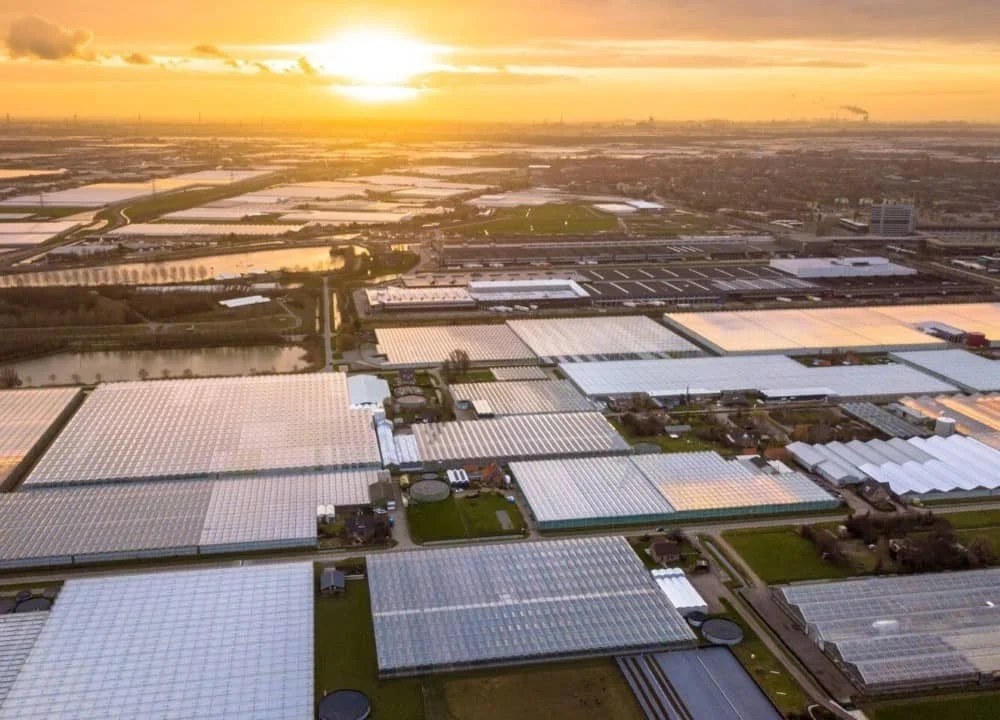
The Netherlands, particularly the Westland area near The Hague, is widely known for its greenhouse expertise and technology used in diverse climates worldwide. LocalDutch states that its approach builds on this background by applying Dutch greenhouse knowledge in a repeatable local format, embedding production within communities rather than supplying standalone equipment.
The company indicates that, if its expansion in the United States is successful, the model could provide investors with exposure to food production assets supported by standardized operations and technology, alongside measurable environmental and social outcomes.
Testing Standardised Local Food Infrastructure
LocalDutch’s Urban Farm Shop model reflects a broader shift in CEA from export-driven greenhouse projects toward locally embedded production systems. If implemented at scale, the concept could test whether standardized, technology-managed food production can operate as neighborhood-level infrastructure rather than as large, centralized facilities. Its emphasis on replication suggests an attempt to reduce variability that often affects greenhouse ventures, particularly in new markets.
The model may find relevance in urban and sub-urban regions where supply chains are vulnerable to disruption or where fresh produce availability is inconsistent. However, outcomes would likely depend on factors such as energy costs, consumer purchasing power, and the ability to maintain operational efficiency across locations. The integration of retail and production in a single site could offer logistical advantages, though it may also introduce operational complexity.
If expansion in the United States progresses as planned, the initiative could provide insight into whether compact, standardized urban farm formats can generate steady demand while maintaining cost discipline and long-term viability.