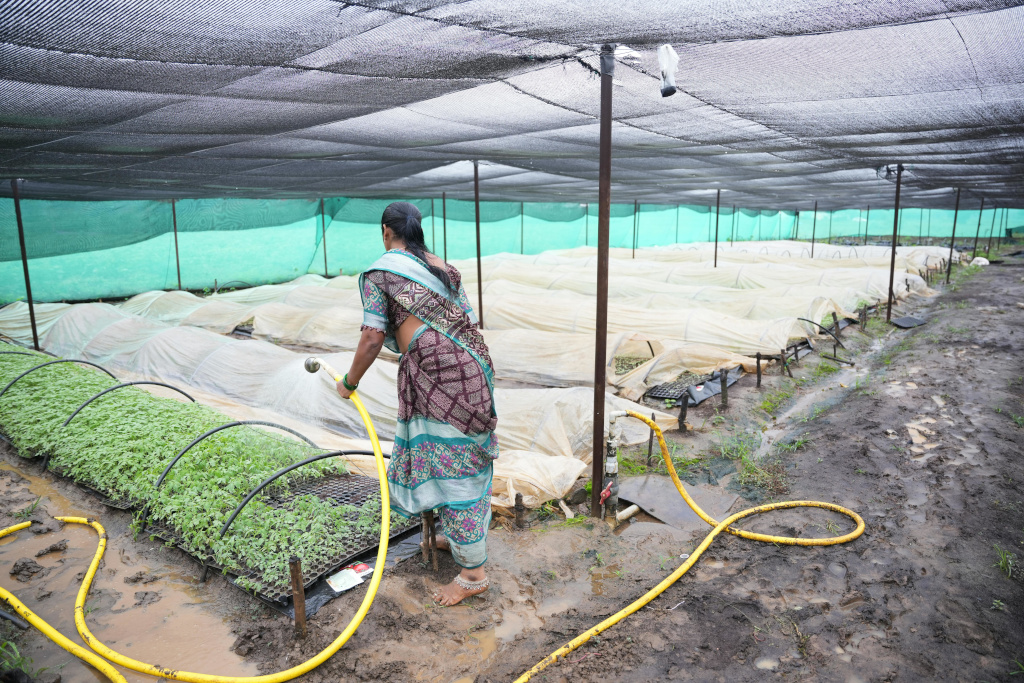
Controlled farming is emerging as one of India’s boldest responses to climate uncertainty. As farmers battle seasons of hope dashed by sudden downpours, scorching heatwaves, or delayed monsoons, the risks to agriculture, which supports nearly half the country’s population, are mounting. In 2023 alone, the Indian Meteorological Department reported significant crop losses in 14 states due to erratic rainfall. For many households, the question has shifted from producing more to simply surviving unpredictability.
From polyhouses on the outskirts of Pune to vertical farms tucked into Bengaluru’s industrial corridors, Controlled Environment Agriculture (CEA) offers a different path. These climate-managed systems promise crops that use less water, require fewer chemicals, and deliver harvests with far greater predictability. The promise is compelling, but is CEA truly a solution for Indian farming or will it remain a niche experiment?
Numbers That Tell a Story
The economics suggest that controlled farming is more than a passing experiment. The Indian indoor farming market, worth US$0.823 billion in 2022, is expected to nearly double and reach US$1.74 billion by 2029, growing at about 11 percent each year. Hydroponics alone is expected to cross USD 4 billion by 2032. Vertical farming, still in its infancy, is growing at over 20 percent annually. These numbers reflect demand from consumers who want safer, pesticide-free, and year-round access to vegetables and greens.
At the same time, these figures must be read carefully. For context, India’s overall agriculture sector contributes about USD 400 billion to GDP. In other words, controlled farming is still a tiny drop in a very large bucket.
The Case for Controlled Farming
There are strong arguments in favour of accelerating controlled farming in India. First, the water factor: with agriculture guzzling over 80 percent of India’s freshwater, hydroponic systems that save 90 percent of water deserve serious attention. Second, climate insulation: a hailstorm in Himachal Pradesh or a hot spell in Telangana can wipe out entire crops, but inside a greenhouse or vertical farm, production continues. Third, market timing: off-season cucumbers or lettuce fetch a premium in urban markets, creating opportunities for farmers who can bear the upfront cost.
For India’s cities, CEA is particularly appealing. Urban consumers are increasingly vocal about food safety and freshness. Peri-urban controlled farms shorten supply chains, reduce spoilage, and create green pockets of production close to demand.
The Barriers We Cannot Ignore
And yet, the hurdles remain steep. A naturally ventilated polyhouse of 1,000 square metres costs upwards of ₹700,000, and more sophisticated vertical systems run into millions. Even with subsidies covering 40-50 percent, these figures are beyond reach for most smallholders.
Energy dependency is another elephant in the room. Climate-controlled farms need reliable power for cooling, pumps, or LED lighting. In states with erratic supply, diesel generators often step in, raising costs and undercutting the environmental argument.
Then comes the human factor: controlled farming demands continuous monitoring, technical knowledge, and disciplined management. A minor slip in nutrient balance can destroy weeks of work. For small farmers already stretched thin, this learning curve is intimidating.
The Technology Horizon
Emerging technologies may soften these barriers. Affordable sensors and IoT devices are beginning to help farmers automate irrigation and climate control. Artificial intelligence is being used to recommend nutrient mixes, predict disease outbreaks, and simulate growing conditions before planting. Advances in LED lighting, solar-integrated farms, and water recycling promise to reduce energy and input costs.
But technology alone will not democratise controlled farming. Without inclusive financing, farmer cooperatives, and assured markets, the benefits may concentrate in the hands of agri-entrepreneurs and startups while leaving small farmers behind.
Also Read: The Rise of India’s Agro-Carbon Market: Startups, Policy Push, and the Road Ahead
What India Must Decide?
The question is: should India push harder to scale controlled environment agriculture, or allow it to remain a niche?
Controlled farming should not be viewed as a replacement for open-field farming—our staples, from wheat to rice, will continue to rely on soil and sun. But controlled farming can and should be treated as a resilience strategy. It is best positioned for high-value horticulture, urban supply chains, and climate-vulnerable zones where farmers cannot afford another failed harvest.
If India chooses to accelerate this path, the roadmap is clear. First, make financing accessible to smallholders, whether through cooperatives or farmer producer organisations. Second, integrate renewable energy into these systems to cut costs and carbon footprints. Third, invest in skill-building programs so that CEA knowledge spreads beyond a handful of progressive farmers. And finally, build consumer trust through transparent certification, ensuring buyers know why produce grown in controlled systems may cost a little more.
A Balanced Future
It is tempting to frame controlled farming as the agriculture of the future. But the truth is more modest: it is part of the future. Open fields and controlled farms must co-exist, each serving roles that the other cannot. Wheat fields in Punjab and rooftop lettuce farms in Gurugram are not competitors but complements in a food system that must feed 1.4 billion people under growing climate stress.
India’s agricultural journey has always been about balancing tradition with adaptation. The Green Revolution of the past gave us food security; the climate-controlled systems of today may give us resilience. The task ahead is not to idolise the technology, but to make it accessible, affordable, and sustainable for those who need it most—the millions of farmers who wake each morning under a sky that no longer guarantees certainty.