
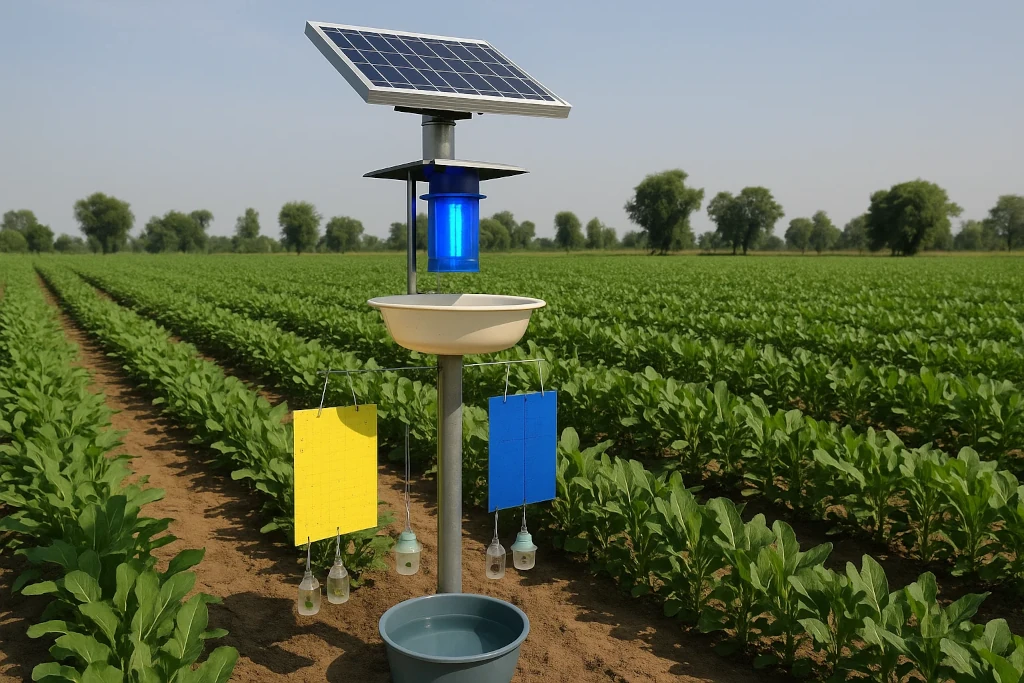
Scientists at ICAR-CIPHET, Ludhiana, in North India have developed solar light traps—an affordable, low-tech innovation helping farmers reduce their reliance on chemical pesticides. Designed to attract and trap harmful insects using solar-powered light, the solution has shown promising results in field trials.
Ranjit Singh, the head of technology transfer at ICAR-Central Institute of Post-Harvest Engineering and Technology (CIPHET) has stated that the trials have shown significant reduction in pest population, cutting costs and lowering pesticide usage.
It’s an eco-friendly affordable solution, especially for small and marginal farmers.
Precision Pest Trap Design
The solar light traps uses blue light, preventing people from harmful ultraviolet (UV) exposure. Guru P N, one of the leading developers of solar light traps has acknowledged the technology for its safety and effectiveness.
The trap is an improvement over existing technologies. The specific wavelength of blue light is safer for humans while remaining highly effective in attracting insects
The solar light traps integrate use of sticky yellow and blue sheets attracts insects in daytime, blue lights for after the twilight, a water bowl that drowns pests, and pheromone lures that target specific species. The device is entirely solar-powered, with an adjustable height ranging from five to eight feet, compatible for a wide variety of crops and farmlands.
The solar light trap is all set to enter in the commercial market. The license for its use is being acquired by Entrepreneur P Shekhar Pandey of Varanasi with guidance from institute director at ICAR-CIPHET Nachiket Kotwaliwale. The director has stated that Pandey will receive his full support to ensure that technology reaches the farming community. He further added that use of solar light traps is a major step forward in sustainable agricultural practices in India.
Also Read: Digital Backbone of Indian Agriculture: Essential Government Apps, Portals & Services for Farmers
Wider Shift From Sprays
Solar light traps are being adopted by farmers in Madhya Pradesh and Telangana as a chemical-free method to control pests. In Balaghat district, farmers reported effective pest control using these devices without spraying pesticides, highlighting reduced costs and environmental benefits.
In Siddipet, Telangana, farmers successfully used the traps to manage insect infestations in paddy fields. Meanwhile, Jawaharlal Nehru Agricultural University (JNAU) in MP launched the SMV-19 solar trap model, targeting pests like aphids, whiteflies, and leaf folders in rice, cotton, and vegetables—promoting safe, sustainable crop protection.

