
Perennial, a MMRV (measurement, monitoring, reporting, and verification) company, has secured the VT0014 tool for use in carbon markets, enabling AI-powered soil carbon quantification. The VT0014 model has been approved by Verra, a nonprofit standards body that administers the Verified Carbon Standard (VCS). The tool provides Digital Soil Mapping (DSM) under Verra Agricultural Land Management (ALM) methodologies for the purpose soil organic carbon quantification.
VT0014 is designed for development, calibration, and validation of data-driven modeling methods to estimate soil organic carbon (SOC) stocks in a location specific manner, that also includes model uncertainty estimations as well. The VT0014 tool leverages the latest science and technologies, including remote sensing, to enable ALM projects to generate high-integrity carbon credits.
The development of VT0014 was led by Perennial and Verra, with support from TerraCarbon and input from a multidisciplinary working group specializing in DSM. As per Verra, the tool also underwent an Independent Expert review to ensure credibility.
This tool is a quantum leap forward in soil quantification. Not only does it lower barriers for MMRV in areas where projects are already underway, it unlocks new regions, new carbon projects and new opportunities for climate finance.
The tool can prove instrumental in expanding access to carbon markets, regenerative financing, and sustainability programs in regions historically excluded from participation, as it facilitates reduction in soil sampling burden and also enables rigorous quantification in remote or data-scarce areas.
ATLAS-SOC-VT0014: Science and Standards
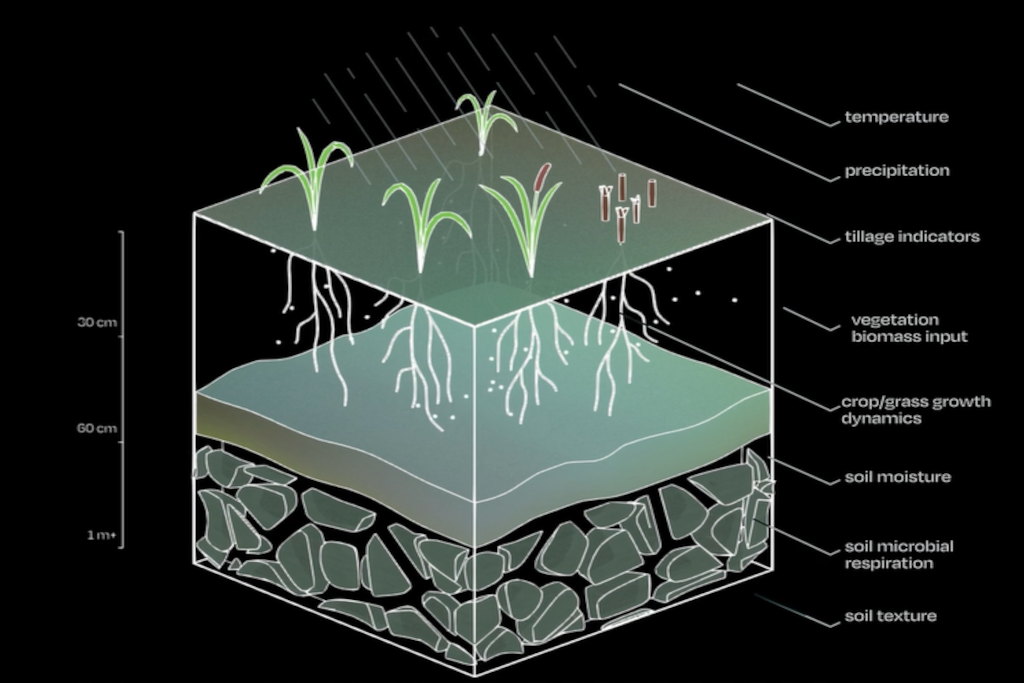
Perennial’s proprietary, peer-reviewed model, ATLAS-SOC, is the company’s core digital soil mapping system. Built on more than 350,000 soil samples and advanced machine-learning models, it integrates remote sensing, microbial, and biophysical data. The model generates hundreds to thousands more SOC data points than sampling alone by filling the gaps between sample locations. Compared to traditional methods, the model requires fewer samples, reducing measurement costs, increasing project ROI, and minimizing disruptions for farmers, while simultaneously improving accuracy. The ATLAS-SOC operates in two modes, the Core model, which provide regional or national baselines, and Fine-Tuned models, which integrates targeted local samples to deliver project-level accuracy above 95 per cent.
Also Read: Aeronero Secures $1.5M Funding to Expand Air Water Generation Technology
The VT0014 tool operationalizes these capabilities within Verra’s Verified Carbon Standard, establishing clear rules for how digital soil mapping models, such as those operated under ATLAS-SOC are selected, calibrated, validated, and applied across diverse Agricultural Land Management (ALM) methodologies. Together, ATLAS-SOC and VT0014 strengthen access to carbon market, ATLAS-SOC is the technical backbone, while VT0014 ensures regulatory rigor. VT0014 and ATLAS-SOC are instrumental in reducing sampling costs, minimizing farmer disruptions, and enabling the generation of high-integrity carbon credits.
Scaling ALM
As outlined by Perennial, VT0014 applies across ALM methodologies such as VM0042 Improved Agricultural Land Management and VM0032 Sustainable Grasslands. The VT0014 tool standardizes the selection, calibration, and validation of digital soil mapping models, ensuring their consistent and transparent application throughout the entire project cycle.
Digital soil mapping uses soil samples, machine learning and biogeochemically-informed indicators to measure soil organic carbon (SOC) at scale. This mechanism is varied and easily accessible, offering broader spatial reach, enhanced coverage, and greater cost efficiency compared to traditional methods. Theses factors contribute in eliminating barriers to effective ALM implementation, while making it more accessible for a wide range of proponents, advancing impactful climate action and also enhancing well-being of affected communities.
Agricultural Land Management projects have the potential to contribute in mitigating the impacts of climate change. With widespread adoption and scaling, crop and livestock activities, together with agroforestry systems, could potentially achieve up to 9.6 GtCO2e in annual emission reductions and removals by 2050. Other than carbon benefits, these projects can enhance soil health and build ecosystem resilience through practices such as crop rotation and agroforestry. They also improve the well-being of communities by boosting yields, supporting long-term productivity, and strengthening food security.


