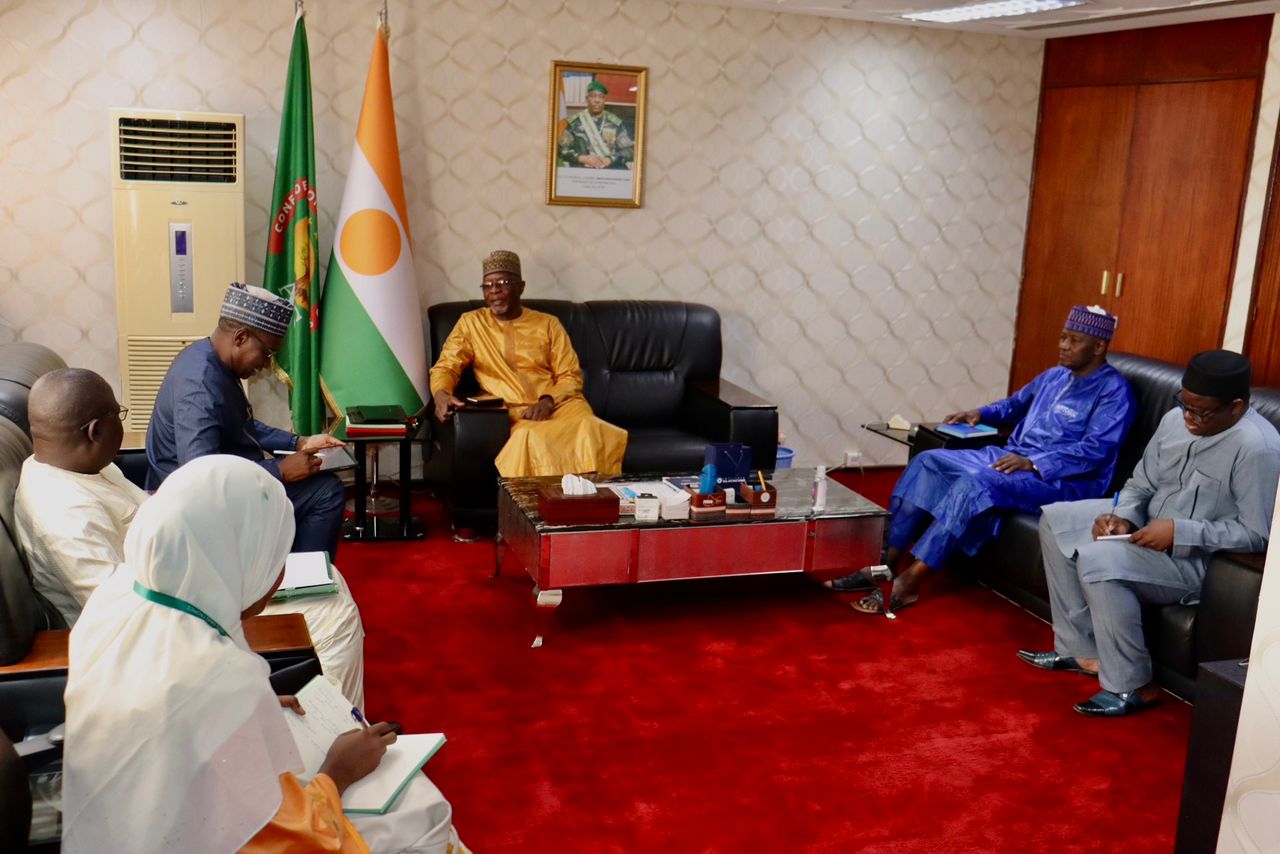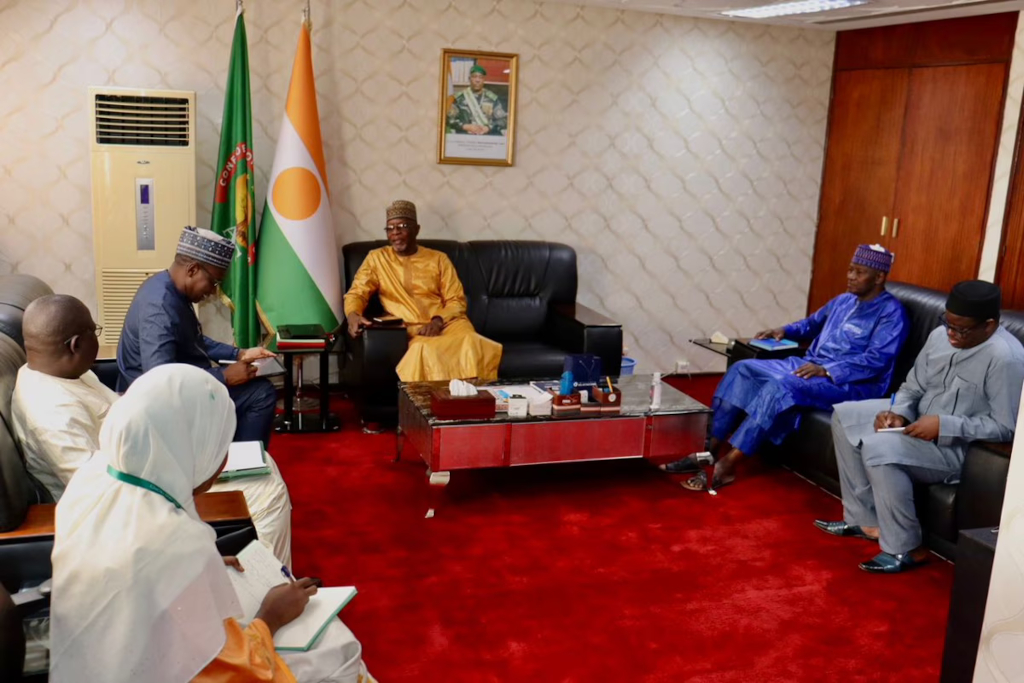
The International Crops Research Institute for the Semi-Arid Tropics (ICRISAT), a leading research organization specializing in dryland agriculture, has reaffirmed its four decade long commitment to support Niger in developing climate resilient agriculture practices. During a meeting with His Excellency Bakary Yaou Sangaré, Minister of Foreign Affairs, Cooperation, and Nigeriens Abroad, and other dignitaries, ICRISAT’s Country Representative, Dr Falalou Hamidou, outlined a new roadmap to foster an ecosystem for sustainable agriculture and strengthen food sovereignty in the country.
The meeting reiterated the importance of ICRISAT continued support and expertise in strengthening Niger’s agricultural systems, with climate change exerting increasing pressure on the livelihoods of farmers. Working from its Sadoré Research Station, ICRISAT has developed and delivered proven technologies in crop enhancement, livestock integration, soil and water management, and land rehabilitation. These solutions have provided a mechanism to Nigeriens farmers in adapting to harsh dryland conditions and a framework to sustain alignment with government strategies for food and nutrition security.
Renewed Alliance Drives Hope in Niger
Around 80% of Niger’s population is directly dependent on rain fed farming, while nearly four in ten face food insecurity. The renewal of four decade old climate resilient agriculture alliance is integral to help Niger withstand escalating climate risks to farming. Prof. Hamidou has highlighted ICRISAT’s preparedness to work closely with the government of Niger in fast tracking initiatives, such as large scale irrigation programs and support programs for food sovereignty, endorsed by Niger’s President, Abdourahamane Tchiani.
Also read: United Way, Project FoodBox Partner to Pilot Medically Tailored Food Program for Children
Prof. Hamidou further emphasised the need to scale up ICRISAT innovations, including development of drought tolerant millet and sorghum, regenerative landscapes and integrated soil fertility management, to deliver greater returns for farmers and build long term resilience. ICRISAT’s Director General, Dr Himanshu Pathak, noted that regardless of persistent challenges, Niger has showcased resilience even in the harshest drylands.
As climate challenges mount, we are not only renewing our commitment to Niger, we are also reaffirming our belief that it can help lead the way in shaping a food-secure future for the Sahel and beyond.
Minister Bakary Yaou Sangaré applauded ICRISAT’s work and announced his intention to visit the Sadoré Research Station along with the Minister of Agriculture and Livestock, Colonel Elhadji Ousmane Mahaman to explore avenues for creating effective solutions to achieve national agricultural development goals.
ICRISAT Efforts Strengthen Niger Agriculture
Since 1981, ICRISAT has worked closely with the Government of Niger to promote innovative and resilient solutions for dryland agriculture. ICRISAT has been able to aid national efforts to help farmers adapt to drought, rehabilitate degraded landscapes and improve the nutritional value of crops.
In 2023, ICRISAT and its partners under the United States Agency for International Development (USAID) funded Livestock Systems Innovation Lab piloted enhanced pigeon pea varieties on demonstration plots in Maradi Region of Niger, through agro-pastoral field schools, as part of the project “Enhancing the Productivity and Resilience of Agro-Pastoral Systems, and Income, Food, and Nutrition Security through Market-Oriented Innovations.”
In Maradi, pigeonpea thrived in challenging conditions where other crops struggled, showcasing its resilience and its potential to close the critical livestock feed gap.
Under this project farmers received training in advanced agronomic practices along with high quality seeds, helping them to adopt sustainable farming techniques. In a related component, ICRISAT and USAID funded project in Niger aims to benefit 1,500 farmers between 2022 and 2025 by promoting market oriented innovations based on integrated crop livestock systems.
In October 2023, the rippling effects of the Russia–Ukraine conflict drove global food and fertilizer prices upward, hitting the Sahel region particularly hard. ICRISAT’s Niamey genebank under the leadership of Dr Falalou Hamidou launched an initiative to increase productivity of pearl millet and sorghum. Under this project, 2,028 seed kits, 1,220 in Niger and 808 in Chad, each containing 5 kg of high quality pearl millet or sorghum were distributed to small scale subsistence farmers. The distributed seeds were planted across approximately 2,028 hectares of agricultural land, enhancing local food production and strengthening resilience against food insecurity.
By incorporating use of advanced agronomic practices, integrated crop livestock systems, and capacity building, these efforts are strengthening the resilience of farmers against market shocks. Amidst the intensifying impacts of climate change, the partnership between ICRISAT and Niger is more critical than ever in helping the country drive meaningful progress towards food sovereignty and a more resilient future.