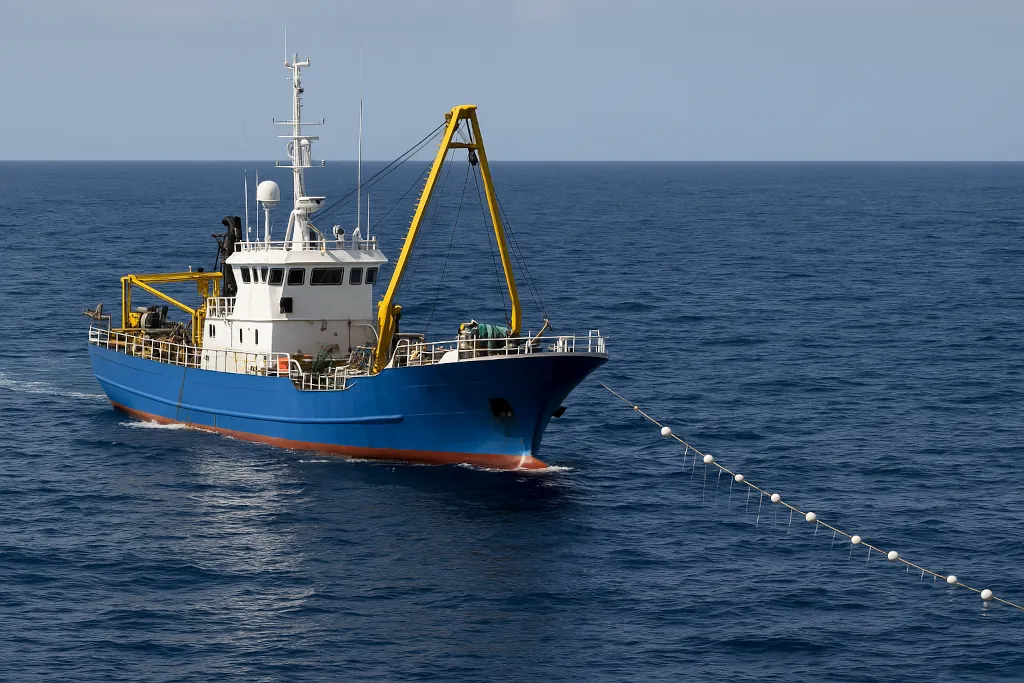
India is preparing to introduce an onboard electronic observer (e-observer) system for remote monitoring and recording of marine fish catch. The initiative will begin with longline fishing vessels and will later be extended to other vessel types. Developed by the Fishery Survey of India (FSI) under the Ministry of Fisheries, the new technology is designed to generate accurate scientific data to support stock assessment and effective fisheries management.
The announcement was made at the inauguration of a five day international workshop on species identification, jointly organised by the Indian Ocean Tuna Commission (IOTC) and FSI in Kochi. The programme has drawn participation from fisheries experts and officials representing 12 nations, including Japan, France, Thailand, Indonesia, Malaysia and South Africa, as well as 18 officials from India’s coastal states.
Advancing Data Collection and Monitoring
The IOTC guidelines mandate observer coverage and electronic monitoring of tuna and tuna like fish catches to ensure sustainable management of these resources. In line with this, India’s e-observer system will provide a mechanism for efficient data collection and monitoring of fishing operations.
Officials underlined that electronic monitoring is essential not only for conservation but also for addressing trade related challenges. Science based credible data, they noted, serves as India’s strongest defence against non tariff barriers and allegations in global markets. By ensuring transparency, such data acts as a passport that safeguards access to export markets, providing Indian fishers and exporters with a level playing field.
Strengthening Governance through PMMSY
The government has already advanced its monitoring framework under the Pradhan Mantri Matsya Sampada Yojana (PMMSY). As part of the scheme, nearly 36,000 fishing vessels have been fitted with transponders to enable real time monitoring.
Given that tunas, tuna like species, and pelagic sharks are highly migratory, authorities emphasised India’s commitment to regional and international collaboration in data collection and management. The focus remains on ensuring the long term sustainability of fisheries while safeguarding the livelihoods of millions dependent on the sector.
Concerns Over Global Quota Allocation
The global quota allocation system for commercial tuna fishing emerged as a key point of concern during the workshop. Experts from the Central Marine Fisheries Research Institute (CMFRI) argued that the current framework does not adequately reflect the needs of developing nations. They called for a revision to secure a more equitable share for countries such as India.
Additionally, the importance of strengthening cold chain infrastructure was highlighted. A well developed cold chain is critical for preserving tuna quality, reducing spoilage, and enhancing the competitiveness of Indian exports in the global market.
Workshop Objectives
The international workshop in Kochi is focused on improving species identification and data collection methods to support reliable stock assessments of tuna and related species. This effort is expected to provide a stronger scientific foundation for fisheries management in India and across the Indian Ocean region.
Also read: Mahindra Launches New Compact Sprayer for Orchard Farmers
Participants noted that better data systems would also contribute to ensuring compliance with international sustainability requirements, thereby supporting both ecological conservation and trade objectives.
Broader Participation
The workshop has seen active participation from fisheries researchers, government officials, and representatives of international organisations. Institutions such as the Centre for Marine Living Resources and Ecology (CMLRE) and the Fishery Survey of India (FSI) were represented by senior officials who addressed the gathering.
The sessions are expected to generate frameworks for enhanced cooperation among participating countries, reinforcing collective responsibility in managing highly migratory species.
Towards Sustainable and Inclusive Fisheries
India’s move to introduce the e-observer system marks an important step in its broader fisheries management strategy. By integrating advanced monitoring tools, strengthening regulatory frameworks through PMMSY, and engaging in international dialogues such as the IOTC-FSI workshop, the country is working towards balancing sustainability goals with economic priorities.
Through improved data systems and cooperation, India aims to secure long term sustainability of its fisheries sector while ensuring continued opportunities for its fishing communities and exporters in the global market.