When Finance Minister Nirmala Sitharaman presented the Union Budget 2026-27 yesterday, one message came through clearly: agriculture is being shaped not only around production, but around the systems that help farmers make better choices, diversify what they grow, and strengthen rural livelihoods.
Alongside a strong focus on fisheries, livestock, and high value crops, the Budget introduced a new national push that sits directly at the intersection of farming and technology: Bharat-VISTAAR.
Here is what stood out for agritech and the wider agriculture ecosystem:
1Bharat-VISTAAR: A National Platform for Farmer Support
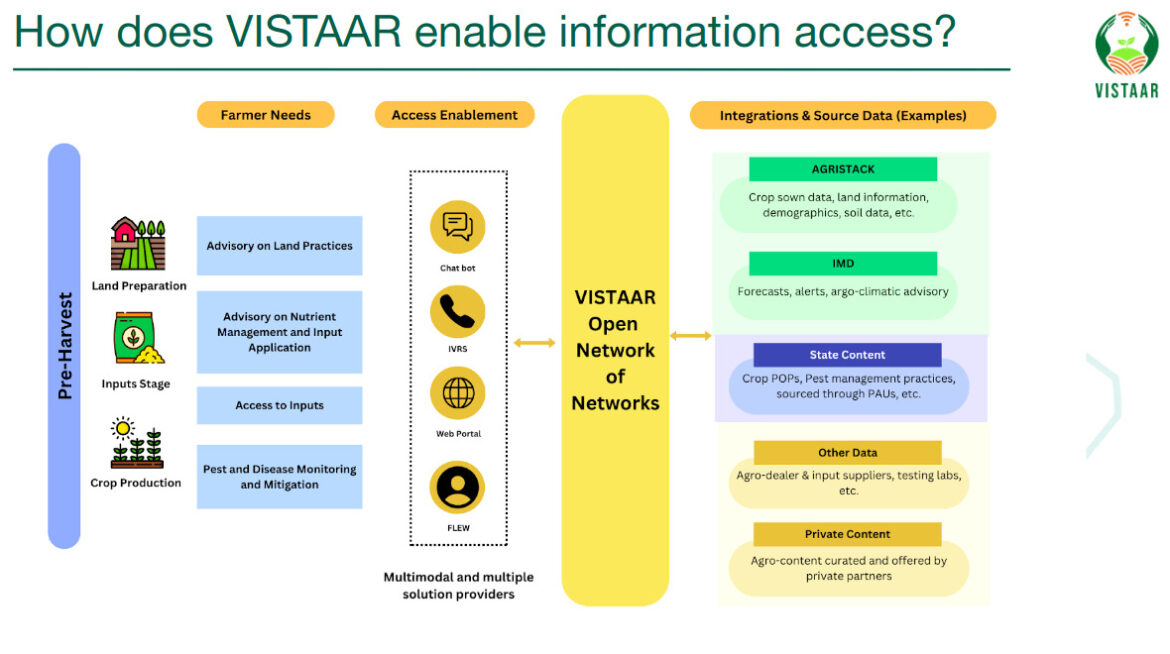
The most direct agritech proposal in the Budget is the launch of Bharat-VISTAAR (Virtually Integrated System to Access Agricultural Resources).
The Finance Minister described it as a platform that will bring together existing agriculture portals and trusted farming practices, while offering customised advisory support in multiple Indian languages.
The aim is to improve productivity, enable better decisions, and reduce risk for farmers.
How this hits reality: For farmers, this signals a shift towards easier access to guidance that is currently scattered across departments, programmes, and local networks. For agritech players, it creates a national framework where advisory, outreach, and support systems may begin to operate at greater scale.
Key takeaway: Bharat-VISTAAR is the budget’s clearest step towards building a unified farmer-facing support ecosystem.
2Fisheries: Start-ups and Value Chains Enter the Picture
The Budget places fisheries firmly within the farmer income conversation. It proposes initiatives for integrated development of reservoirs and water bodies, while strengthening coastal fisheries value chains.
Importantly, the speech links market connections with start-ups, women-led groups, and Fish Farmer Producer Organisations.
How this hits reality: Fishing communities often face challenges in storage, transport, pricing, and market access. Strengthening the value chain means better systems between catch and consumer, where innovation and enterprise participation can play a meaningful role.
Key takeaway: Fisheries is being positioned as a modern livelihood sector with room for new models and new players.
3Livestock and Animal Husbandry: A Bigger Rural Enterprise Focus
Livestock contributes a significant share of farm income, especially for marginal households. The Budget proposes support for entrepreneurship development through veterinary infrastructure, diagnostics, breeding facilities, and stronger livestock-based value chains.
How this hits reality: Animal husbandry is increasingly moving beyond subsistence activity into organised rural enterprise. Better services and infrastructure can improve productivity, reduce losses, and open up stronger income opportunities for dairy, poultry, and livestock farmers.
Key takeaway: Livestock is being treated as a structured rural economy, not an auxiliary activity.
4High-Value Agriculture: Diversification Becomes Central
The Speech places emphasis on moving towards crops that can generate higher incomes, especially in coastal and hill regions. Support is proposed for crops such as coconut, sandalwood, cocoa, cashew, and nuts like walnuts and almonds.
How this hits reality: Diversification is often the difference between low-margin farming and sustainable incomes. High-value crops also bring stronger opportunities in processing, branding, and export-led growth, where agritech solutions can add value across the chain.
Key takeaway: The Budget is signalling a future where farm growth is linked to value, not volume alone.
Also read: Union Budget 2026: Agritech Experts Call for Last Mile Adoption and Policy Clarity
5Coconut Promotion Scheme: A Targeted Productivity Push
India is the world’s largest producer of coconuts, and the Budget proposes a Coconut Promotion Scheme focused on increasing productivity by replacing old, non-productive trees with improved planting material.
How this hits reality: For coconut-dependent communities, ageing plantations reduce incomes over time. Replanting and productivity interventions can have long-term impact, especially when paired with better market and processing support.
Key takeaway: Focused commodity programmes remain central alongside broader digital initiatives.
6Building Indian Crop Brands: Cashew, Cocoa and Sandalwood
The Speech proposes dedicated programmes for cashew and cocoa to strengthen domestic processing and export competitiveness, with an ambition to build premium Indian brands by 2030. Sandalwood cultivation and post-harvest ecosystems are also highlighted.
How this hits reality: This reflects a shift from being only a producer of raw outputs to building value-added agricultural brands. That opens space for innovation in traceability, processing, quality systems, and rural enterprise development.
Key takeaway: Agriculture is being framed as a global value opportunity, not only a domestic supply story.