
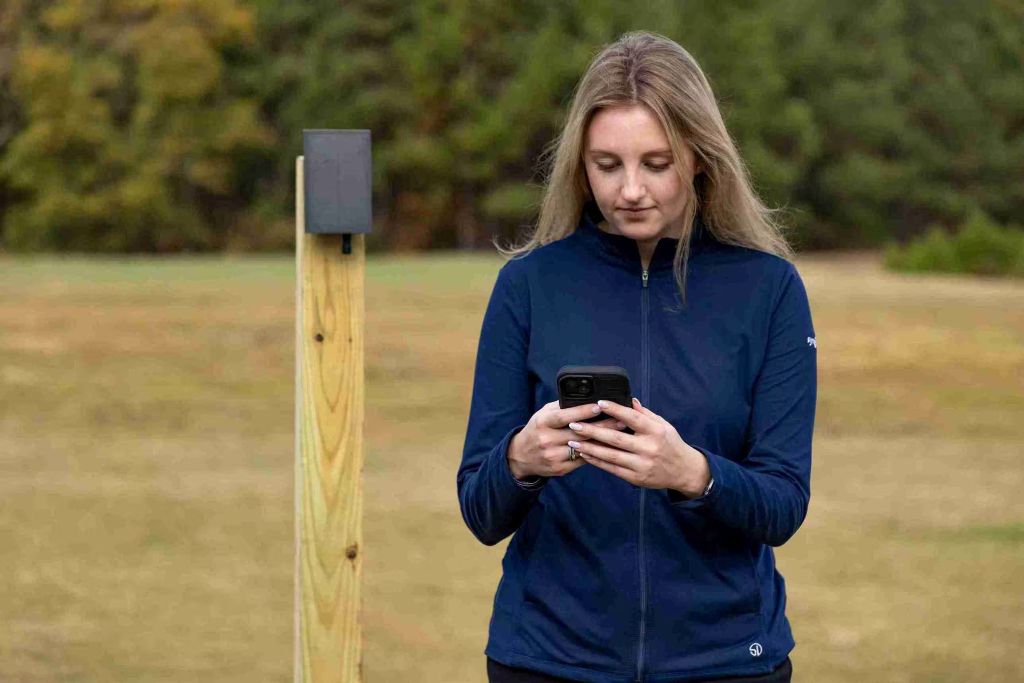
Swiss based agritech company Syngenta launched the Aero GCX microclimate sensor, expanding its digital offering for turf and landscape management through an above ground environmental sensing network. The sensor is designed to enhance how property managers collect, analyze, and act on localized climate data, with real time, property specific insights delivered through the GreenCast Connect platform.
Capturing real time, location specific climate data
The Aero GCX microclimate sensor is solar powered and continuously measures three key parameters. It captures ambient temperature across a range from -40°F to 257°F (-40°C to 125°C), monitors atmospheric pressure with an accuracy of ±0.5 hPa, and tracks humidity from 0 to 100 percent relative humidity with accuracy better than two percent. Data is transmitted in real time using wireless cellular communication and is accessible through a cloud based dashboard on both mobile and desktop devices.
Supporting planning beyond regional weather forecasts
Steve Dorer, head of Syngenta Digital Platforms in North America, said the sensor enables turf professionals to incorporate automated microclimate reporting into their planning processes. By using location specific data alongside regional forecasts, property managers can align decisions more closely with actual on-site conditions.
Aero GCX represents a significant advancement in turf management technology. By providing location specific microclimate data, turf professionals can plan actions based on automated microclimate reports in addition to regional weather forecasts.
Monitoring microclimates across complex properties
Integrated into GreenCast Connect, Aero GCX functions as part of a wider system that aggregates climate data from multiple sensors placed across a property. This allows users to review summaries of environmental trends while also examining conditions at indicator locations. The system is intended to help monitor microclimates in challenging growing areas, including zones with poor air circulation, low lying frost prone sections, or areas where disease pressure tends to emerge earlier.
Applications in disease, frost, and evapotranspiration tracking
Data generated by the Aero GCX supports disease forecasting where ambient temperature and humidity influence establishment and spread. Temperature readings are used for frost forecasting at selected indicator sites, while combined climate data improves precision in tracking evapotranspiration. Location based humidity information also assists turf managers in evaluating potential leaf wetness conditions.
Design focused on ease of deployment and use
The Aero GCX microclimate sensor is compact, measuring 5.9 inches by 3.74 inches by 2.3 inches, and is designed for quick installation with minimal maintenance. Once deployed, sensors can be connected to GreenCast Connect within minutes, enabling immediate data visibility without complex setup requirements.
Also read: What Finance Minister Nirmala Sitharaman’s Budget Signals for Agritech
Expandable architecture and below-ground integration
The system is expandable, allowing users to add other above ground sensors that track variables such as wind, rainfall, or macronutrients based on operational needs. For a combined view of surface and subsurface conditions, the Aero GCX integrates with the Spiio GCX, enabling users to evaluate environmental conditions above and below ground within a single analytics environment.
Consolidated analytics through GreenCast Connect
Within GreenCast Connect, data from Aero GCX and associated sensors is consolidated into customizable analytics and reports. Turf managers can create property wide snapshots or focus on sensitive zones, overlaying soil and ambient data to identify areas vulnerable to frost, disease, or drought. Reports generated through the platform support internal coordination and provide objective documentation for decision making.
Digital tools for continuous field visibility
Syngenta stated that commercial customers across the turf and landscape sector are using GreenCast Connect on a daily basis to interpret environmental data and manage operations remotely. Through the GCX mobile app and desktop interface, users can access real time sensor data at any time, reduce manual condition checks, and rely on pest development models and alerts to plan treatments proactively and align interventions with identified risk windows.


